Concrete Contractor in Two Harbors, MN
Driveways, patios, steps, garage slabs, foundations and commercial flatwork across Two Harbors and Lake County — built for shallow bedrock, direct lake exposure and a housing stock that mostly predates the code that now governs it. Estimates are free and there is no obligation to book the work.
Your Two Harbors Concrete Company
Duluth Premier Concrete is your local resource for concrete driveways, patios, sidewalks, steps, garage slabs, foundations and commercial flatwork throughout Two Harbors and Lake County. We work with experienced concrete contractors who plan a North Shore job around the rock and the weather rather than around the calendar.
Two Harbors is the furthest point up the shore in the service area, and the ground there is the reason the town sits where it does. The harbour was chosen because it was a clay-bottomed bay in a landscape where the alternatives were rock, and that is still the short version of what a concrete job here has to deal with: thin glacial cover over bedrock across most of the surrounding country, with pockets of clay where the water sat.
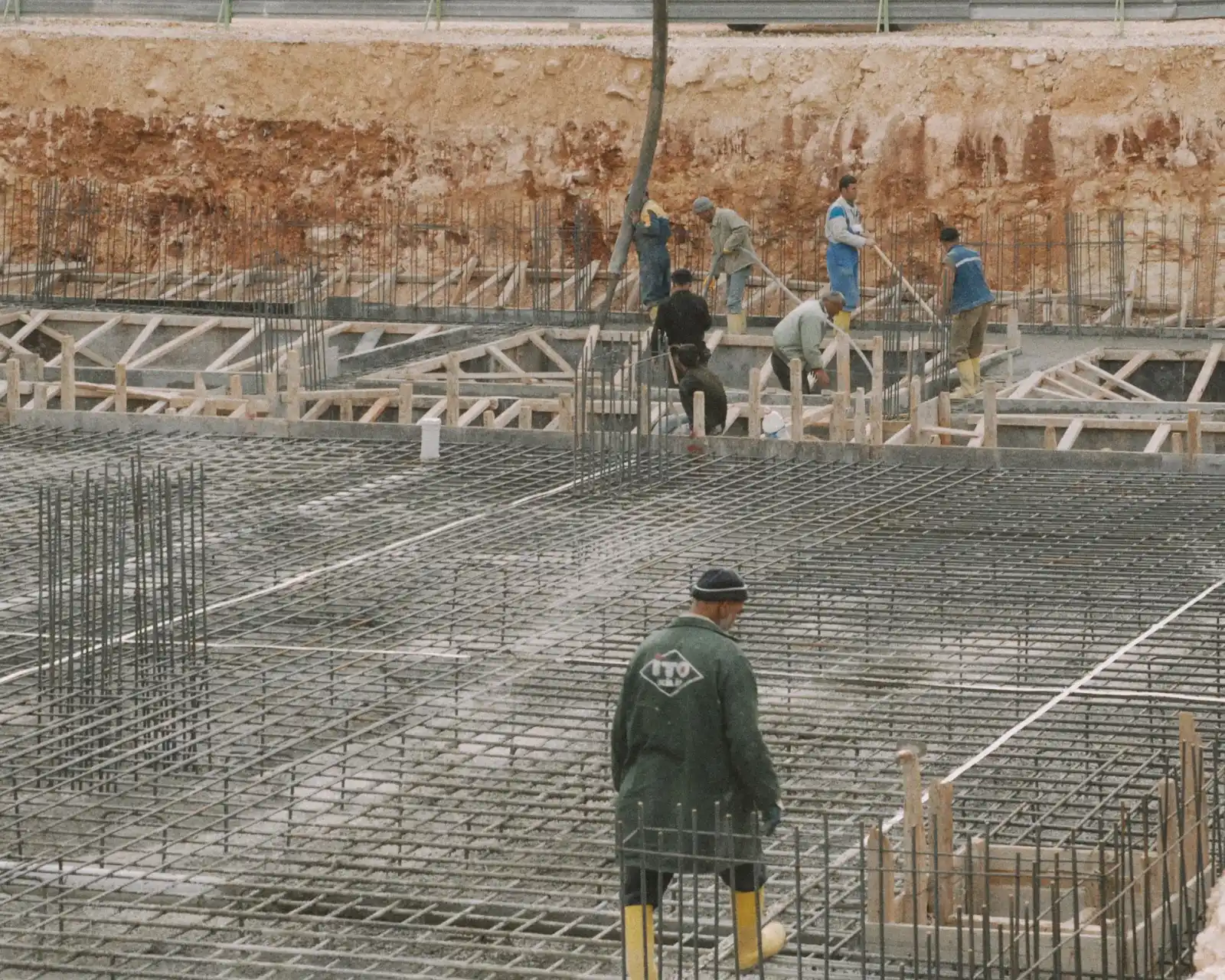
The practical effect is that excavation is the least predictable line in a North Shore estimate. A footing carried to the depth Lake County requires may go through ordinary digging or may hit rock at three feet, and the difference is a hammer attachment and a different hourly rate. Neither outcome can be established from a photograph or a phone call, which is why nobody should be quoting a Two Harbors footing job sight unseen.
The second factor is exposure. The town sits directly on Lake Superior, and everything about a slab here — air entrainment, the sealer schedule on decorative work, whether de-icing salt goes on it at all — is a response to wind, spray and a freeze-thaw cycle that runs harder here than it does a few miles inland. Specification here follows from that rather than from a generic northern climate.
Concrete Services in Two Harbors, MN
Residential and commercial concrete across Two Harbors, quoted on-site because the ground under a slab decides more about it than the concrete does. Every service below links through to the full detail on it.
Concrete Driveways in Two Harbors, MN
New driveway pours, full replacements, extensions and widening. The part of the job that decides the outcome happens before any concrete arrives: the old surface out and hauled off, four inches of Class 5 aggregate placed in two-inch lifts and compacted between them, and reinforcement tied and lifted onto chairs rather than laid on the base and poured over. Exterior mix at 4,000 psi with 5 to 8 percent air entrainment, because a driveway here spends half the year cycling through freezing and thawing. Control joints get saw-cut within the first day, a quarter of the slab thickness deep. An expansion joint separates the slab from the garage rather than a cold joint.
Concrete Patios in Two Harbors, MN
Backyard patios, patio replacements and custom shapes sized to the grade behind the house. A patio slab floats — it moves with the ground rather than resisting it — so the base and the drainage carry the work, not a footing. Pitch runs away from the foundation, which sounds obvious and is the single most common thing an existing patio gets wrong. Broom finish or exposed aggregate, and joints laid out at roughly two to three times the slab thickness in inches: about twelve-foot spacing on a four-inch slab, not wherever the layout happens to look tidy.
Stamped Concrete in Two Harbors, MN
Stamped patios, driveways and walkways in slate, ashlar, wood-plank and cobble patterns, with integral color or a color hardener, a release agent, and a sealer schedule somebody has to actually keep — roughly every two to three years in a climate that salts its pavement. Stamping is the finish most exposed to freeze-thaw and de-icing damage, so it belongs where it will be maintained. Where it won't be, a broom finish with a saw-cut border costs meaningfully less and holds up better, and that is worth saying before the deposit rather than after the third winter. Decorative work this close to open water lives a harder life than the same slab would inland, and the sealer schedule stops being optional maintenance and starts being the thing that decides how long the finish lasts.
Concrete Slabs in Two Harbors, MN
Garage slabs, shed and outbuilding pads, home-addition slabs and equipment pads. Subgrade compacted in lifts, a vapor barrier where the slab is going under a heated space, and reinforcement sized to the load the slab will actually carry rather than to what fits the bid. A floating slab does not need a frost footing; anything structural bearing on it does, and which category a job falls into is the first question worth settling. Garage slabs pick up two more requirements: pitch to the overhead door, and an expansion joint where the slab meets the foundation wall.
Concrete Sidewalks & Walkways in Two Harbors, MN
Residential sidewalks, garden paths, front-walk replacements and sections that frost has lifted out of line. Four inches of concrete over compacted base, jointed at the spacing the slab thickness calls for. The important part is diagnostic: a walk that heaved once will heave again unless the reason gets fixed, and the reason is almost always a base that was never compacted or water with nowhere to go. Replacing the panel without touching the cause buys about three winters, which is why a good estimate spends time on where the water goes before it talks about the finish.
Concrete Steps in Two Harbors, MN
Front entry steps, porch and patio steps, and replacement of flights that have settled or rotated away from the house. Steps are the one piece of residential flatwork that genuinely needs footings carried below frost depth, and that excavation is the largest hidden cost in the job — it is why a set of steps costs more than its visible volume of concrete suggests. Uniform riser heights, a non-slip finish for the icy months, and a real footing rather than a flight set on grade. An estimate that never mentions footing depth is pricing a flight that will move. A great many Two Harbors entries date from the ore-boom decades and were set long before any footing depth was required, which is why so many of them have rotated rather than simply worn out.
Concrete Repair in Two Harbors, MN
Crack repair, spalling and scaling repair, joint repair, and a straight answer about when a slab is past repairing. Surface preparation decides whether a patch bonds or pops off inside a year; the material itself is the cheap part. Some failures are worth repairing and some are the slab telling you something — scaling across an entire driveway surface is usually de-icing salt on concrete that never got a chance to cure properly, and no patch reverses that. Knowing which of the two you have is most of the value in the visit.
Residential Concrete in Two Harbors, MN
The whole residential line: driveways, patios, walks, steps and slabs, plus garage floors, foundations and footings, resurfacing over sound slabs, decorative finishes, and removal and replacement. Residential work in this region is mostly a question of what is under the slab rather than what goes on top of it — rock close to the surface in some places, fill of unknown age and depth in others, and clay that holds water in the low ground. That question gets answered by somebody standing on the site with a shovel, not from a street view, which is why every number is a site number.
Commercial Concrete in Two Harbors, MN
Flatwork, aprons, dumpster pads, entry slabs, parking lots, loading and delivery areas, warehouse and industrial floors, sidewalk and trip-hazard correction, and structural concrete built to the engineer's drawings. Thickness, reinforcement and joint layout come off wheel loads and rack post loads rather than a residential rule of thumb. The scheduling constraint is usually the real constraint: commercial work gets phased so the property keeps a usable entrance and keeps trading through the pour, which often means nights, weekends, or a lot done half at a time. Highway 61 frontage here carries a heavy seasonal swing, so commercial flatwork is usually phased around keeping an entrance open through the summer months rather than around the pour itself.
Three Things a Cheap Concrete Quote Leaves Out
A phone number and a truck in the driveway don't make a concrete company. Here's what actually separates one on a job in Two Harbors, MN.
Base Compacted in Lifts
Four inches of Class 5 aggregate placed in two-inch lifts and compacted between them, because a plate compactor's energy only reaches so deep. Loose aggregate spread to grade is gravel waiting to move, and nothing poured on top of it substitutes for the base underneath.
Steel on Chairs, Not on the Ground
Rebar only works where it sits in the middle of the slab, tied to a grid and lifted onto chairs. Steel laid on the base and poured over is a common shortcut that costs the same in material and does nothing — it is worth walking the site before the truck arrives and looking for it.
Joints Cut in the First Day
A slab is going to crack; the only real decision is whether it cracks on a line somebody chose. Control joints get saw-cut within the first day — not three days later, once the slab has already answered the question itself.
What Concrete Work in Two Harbors, MN Has to Deal With
Bedrock is not far down
The Minnesota DNR describes the North Shore highlands plainly: glacial drift is thin across the entire subsection and bedrock is exposed or near the surface over large areas. On flatwork that mostly means the base build is straightforward. On anything with a footing it means the excavation is the wild card, and an estimate that does not say what happens if rock turns up is an estimate that will have that conversation later, in worse circumstances.
Lake County's 60-inch footing depth
Lake County sits on Minnesota's deep-frost list alongside St. Louis, Carlton, Cook and Itasca — a minimum of 60 inches from finished grade to the bottom of a footing, against 42 inches through most of the state. Combined with shallow bedrock, that is the combination that makes a set of front steps here cost what it does. It is also why comparing a Two Harbors step bid against one from central Minnesota is not comparing like with like.
Direct exposure to the lake
Wind and spray off open water drive more moisture into an exposed slab than an inland site sees, and moisture in concrete through repeated freeze-thaw cycling is what causes scaling and spalling. Exterior mix here wants 4,000 psi with 5 to 8 percent air entrainment as a floor, not as an upgrade, and new concrete should get through its first winter without any de-icing salt on it at all.
A built environment older than the code
The town was platted in 1885 and the ore trade was already running by then; the harbour light went up in 1892 and the public library in 1909. Most of the original residential concrete in the older blocks was placed long before frost-depth requirements, air entrainment or control-joint practice existed in any modern form. That is useful diagnostic information rather than a complaint — it explains why so much of what fails here fails at the footing rather than in the middle of the slab.
Where This Comes Up Around Two Harbors
The blocks above Agate Bay
The oldest residential streets, laid out around the harbour and the ore trade. Steps, walks and retaining work here are frequently original, and a replacement is usually the first time that piece of ground has ever been excavated to a modern footing depth.
The Highway 61 corridor
The only through route, and the commercial frontage that comes with it. Entry slabs and aprons take year-round through traffic plus a heavy summer season, and phasing a replacement so a business keeps an open entrance is normally the tightest constraint on the job.
The Burlington Bay side
Properties on the eastern bay sit closest to open water and take the most direct weather. Exposure drives specification there more than anywhere else in town — mix, finish and sealer schedule all follow from it.
When We’re Not the Right Call in Two Harbors
- A single cracked sidewalk square, or a hairline crack in a garage floor that isn't moving. A bag of patch material and an afternoon is the honest answer, and anybody who quotes that as a tear-out is selling you something you don't need yet.
- A pour somebody wants scheduled in February. Exterior flatwork here has a season, and a contractor who agrees to place a driveway on frozen subgrade in the middle of winter is agreeing to build you a problem you will pay to fix twice.
- A budget that doesn't cover tear-out and haul-off on an existing slab. Four inches of concrete is roughly 55 pounds per square foot of material that has to leave the site, and a replacement quote that leaves it out is how a number comes in low and finishes high.
- A small repair up the shore in the middle of winter. At this range along Highway 61 nobody can honestly promise a response window between November and April, and any concrete company that offers one is quoting the weather it wishes it had rather than the weather it is going to get.
Frequently Asked Questions
- Do you serve Two Harbors, MN?
- Yes. Two Harbors is about 26.3 miles northeast of Duluth in Lake County, up Highway 61. It is the furthest point up the North Shore in the service area, which is a deliberate limit rather than an accident — past there the drive stops making sense for the customer paying for it.
- Is the footing depth in Two Harbors the same as in Duluth?
- Yes. Lake County is on Minnesota's deep-frost list along with St. Louis, Carlton, Cook and Itasca, all at a minimum of 60 inches from grade to the bottom of the footing, while most of Minnesota requires 42. What differs here is not the number but the digging — shallow bedrock means that 60 inches is sometimes ordinary excavation and sometimes rock work.
- Does being right on the lake change the concrete specification?
- It changes how much the specification matters. Exterior mix at 4,000 psi with 5 to 8 percent air entrainment is the standard for freeze-thaw exposure anywhere in this region, but on a site taking wind and spray off open water there is no margin in going below it. The other two decisions that carry real weight are keeping de-icing salt off new concrete through its first winter, and keeping to a sealer schedule on any decorative or stamped surface rather than treating sealing as a one-time step at handover.
- What does concrete cost in Two Harbors?
- The regional figures are the starting point: HomeBlue puts un-reinforced concrete driveways in Duluth at $7 to $12 per square foot and reinforced at $8 to $14, with demolition adding roughly $1.40 to $2.30 per square foot, broom-finish flatwork at about $5 to $13 and stamped or decorative work at about $8 to $18. Two Harbors carries two additional factors: haul distance from the ready-mix plant, which matters on a large pour, and the real possibility of rock in a footing excavation. Both are quoted after somebody has seen the site.
- When can concrete be poured in Two Harbors?
- The window is slightly shorter than inland. Lake Superior keeps the shore cool well into spring, so subgrade thaws later here than it does in Duluth, and the risk of an early cold snap in autumn is real. In practice that means booking earlier in the year for a summer slot rather than assuming a late-season date will hold.
Learn More
- Minnesota Residential Code, Chapter 5: Foundations — Minnesota's foundation requirements, including the county frost-depth table that puts St. Louis, Carlton and Lake Counties at a 60-inch minimum against 42 inches through most of the state.
- American Concrete Institute — Concrete FAQ — The industry body's own answers on cracking, joint spacing and curing — useful for checking any claim a contractor makes about why a slab cracked.
- University of Minnesota Extension — Managing Yard Water — Where surface water goes on a lot, which is the question behind most heaved walks and settled patios in this region.
Need a Concrete Contractor in Two Harbors, MN?
Tell us what’s going on and get an immediate on-site quote — no charge for the estimate, and no obligation to book it.
Get My Free Estimate