Concrete Resurfacing in Duluth, MN — Driveway, Patio & Walkway Overlays
A new surface over a sound slab, at a fraction of replacement cost. Assessed honestly on-site, because an overlay only works over concrete that has stopped moving.
Concrete Resurfacing in Duluth, MN
Duluth Premier Concrete is your local resource for concrete resurfacing throughout Duluth and St. Louis, Carlton & Lake Counties and the Twin Ports. We work with trusted concrete finishers who check whether the slab underneath has earned an overlay before quoting one.
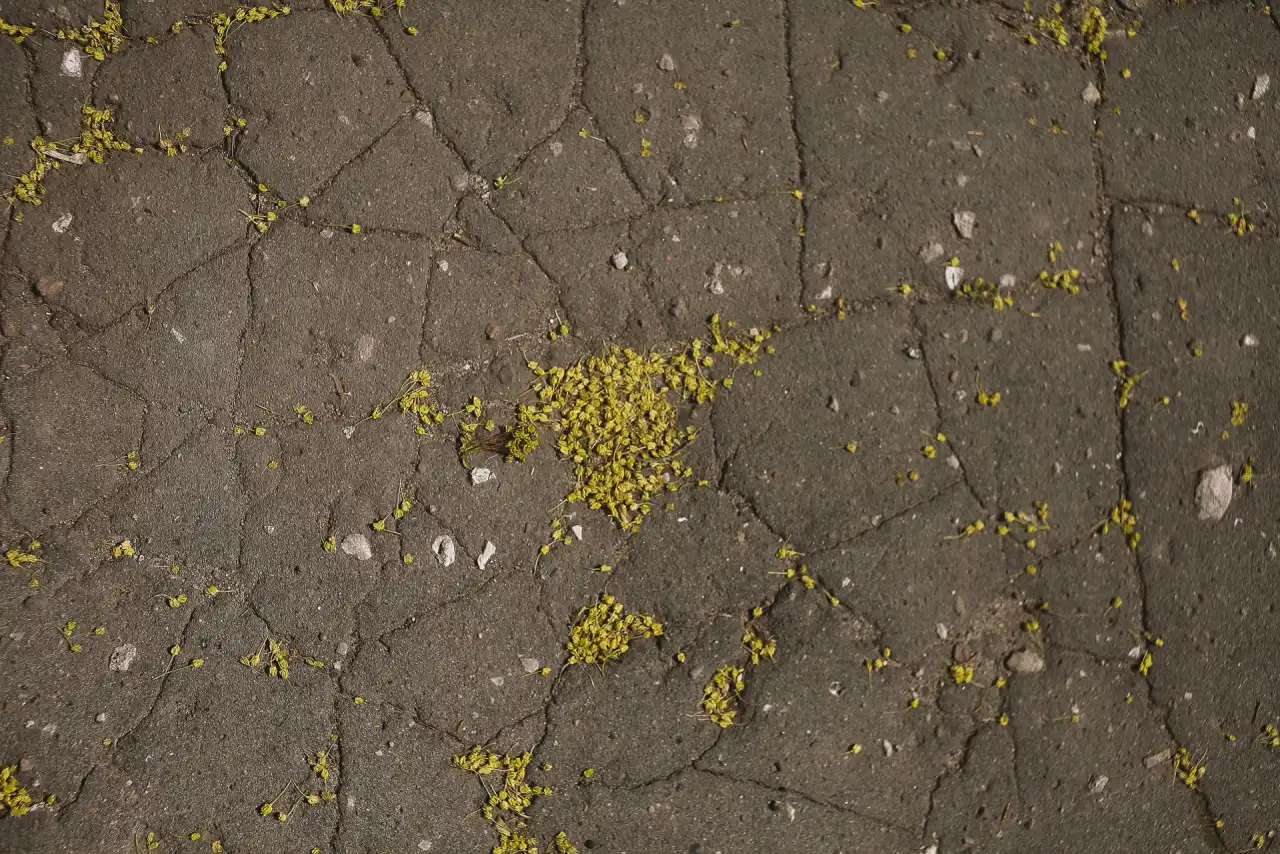
Resurfacing solves a specific problem: a slab that is structurally fine and looks terrible. That combination is common here, because the thing this climate attacks first is the top few millimetres. Salt and freeze-thaw cycling take the surface off a driveway or a garage approach long before the concrete underneath loses any strength, and the result is a slab that will carry a truck for another thirty years and looks like it should be replaced tomorrow.
The whole method rests on one condition: the slab underneath has to have stopped moving. A polymer-modified overlay is typically a quarter inch to half an inch thick, sometimes a little more with a broom-on system. It has no structural capacity of its own — it follows whatever is beneath it. Over a stable slab it is a genuinely excellent value, restoring the surface for a fraction of replacement cost with far less disruption and no tear-out. Over a slab with a working crack or a settled corner, that crack reappears through the new surface, usually within a year. Any contractor quoting an overlay without first establishing which of those you have is quoting a product rather than a solution.
What's Included in a Duluth Concrete Resurfacing Quote
- Assessment of whether the slab is stable enough to carry an overlay at all
- Deep cleaning and degreasing, since oil and contaminants prevent any bond
- Removal of all loose, scaled and delaminated surface material back to sound concrete
- Mechanical surface profiling — grinding, scarifying or shot blasting — to open the concrete up
- Repair of static cracks and spalled areas before the overlay goes on
- Honouring existing control joints through the new surface rather than covering them
- A bond coat or slurry coat where the overlay system specifies one
- Polymer-modified cementitious overlay placed to the specified thickness
- Finish to match the intended look — broom, knock-down, spray texture, stamped or stencilled
- Integral or applied color where a colored finish is specified
- Cure, and sealer where the system calls for it, plus a maintenance schedule
Concrete Resurfacing in Duluth, MN
Driveway Resurfacing
The most common candidate, because driveways take the worst of the salt exposure and are the most expensive thing to replace. A driveway that has scaled across its surface but sits level, drains properly and has no stepped cracks is close to an ideal overlay job — the slab is doing its structural work fine and only the wearing surface has given up. The caution specific to driveways is that they're the one surface that gets vehicle traffic, plow blades and hot tires, so the overlay system has to be specified for vehicular use rather than for a patio. Thin decorative systems designed for foot traffic will not survive a winter under a plow. Bond is everything here: an overlay that lifts under a tire produces a much worse-looking driveway than the scaled one it replaced, and every bond failure traces back to preparation.
Patio Resurfacing
Patios are the best resurfacing candidates of all, and the place where the decorative options genuinely pay off. No vehicles, no plow, lighter loads, and an owner who mostly cares how it looks. An overlay over a sound patio slab can go on as a plain broom-textured surface, a knock-down or spray texture, a stencilled pattern, or a fully stamped overlay that turns a dated grey slab into something that reads as stone. Costs sit well below replacement and the disruption is a fraction of it — no excavation, no tear-out, no several tons of concrete leaving through the back yard. The check is the same as everywhere: level, stable, no working cracks. A patio that has settled toward the house is a drainage problem before it's an appearance problem, and an overlay on it preserves the drainage problem under a nicer surface.
Walkway & Sidewalk Resurfacing
Walkways resurface well when the panels are still level with each other and the damage is surface wear — scaling from shovel and salt, a rough dusting surface, a look that no longer matches the rest of the property. The panel-by-panel nature of a walk helps: sound panels can be overlaid while a heaved one gets replaced, and the overlay ties the appearance back together. Traction is the design requirement to insist on. A smooth overlay on the main winter route to a front door is a genuine hazard, so the finish should be broom-textured or the sealer should carry an anti-slip additive. The other detail is thickness at the edges: an overlay adds a quarter inch or more, and where a walk meets a threshold, a driveway or a step, that difference has to be feathered or the transition becomes the new trip hazard.
Decorative Concrete Overlays
The version people are usually picturing when they ask about resurfacing: taking a plain or ugly slab and giving it a finish it never had. Micro-toppings go on thin and smooth for a contemporary look. Spray-down and knock-down textures add grip and hide imperfections in the substrate, which makes them forgiving on an older slab. Stencilled overlays produce a brick or tile pattern using a paper stencil and a colored topping. Stamped overlays are the thickest option and take a mat impression the same way a new stamped slab does, at a fraction of the cost of pouring one. All of them are surface systems that live and die on bond and on sealer maintenance, and all of them will telegraph a moving crack from below. In this climate, the honest planning assumption is periodic re-sealing for as long as you want the finish to look right.
Worn Concrete Surface Restoration
The category that covers everything else: a garage floor that dusts every time it's swept, a shop floor that has been ground down by traffic, a slab that's structurally fine but has been patched so many times it reads as a quilt, or concrete that's simply old and tired. Restoration here starts by understanding why the surface is failing. A dusting floor usually has a weak surface layer from over-watered concrete or an early finish, and that layer has to come off, not be covered — an overlay bonded to a weak skin fails at that skin, not at the glue line. A floor that's been repeatedly patched needs the patches assessed individually, since a well-bonded patch can be overlaid and a loose one can't. Sometimes the conclusion is that the surface layer is too compromised to bond to, and then replacement or a much thicker bonded topping is the real answer.
Resurfacing vs. Replacement
What resurfacing costs and what it doesn't
An overlay costs materially less than tearing out and repouring the same area, and it skips demolition, disposal, excavation and base work entirely. What it doesn't do is give you a new slab. Its life is tied to the slab underneath, so the value depends entirely on how much life that slab has left.
Disruption and timeline
Resurfacing is days rather than weeks, with no excavator, no tear-out and no several tons of broken concrete crossing the property. On a back-yard patio with tight access, that difference is larger than it sounds and sometimes decides the project on its own.
Where replacement wins
Any slab that's still moving. Stepped cracks, settlement, heaving, a failed base — replacement is the only real answer, because an overlay reproduces every one of those problems on a new surface within a year or two. Replacement also wins when the drainage needs correcting, since that means changing the slab's grade.
The hybrid that often makes sense
Replace the failed panels, overlay the sound ones. Concrete's joints make it modular, so a driveway with two bad panels and six good ones doesn't need one treatment across the whole thing. The overlay then unifies the appearance across new and old.
Signs Your Concrete Is a Resurfacing Candidate
- The surface has scaled or is dusting, but the slab sits level with no stepped cracks
- Concrete is structurally sound and drains correctly, and the complaint is purely appearance
- The slab has been patched repeatedly and now looks like a quilt of different-colored concrete
- You want a decorative finish on a plain slab without the cost of pouring a new one
- Replacement is out of budget this year and the slab has real life left in it
- Access is genuinely difficult and avoiding tear-out and haul-off is worth a lot
- A garage or shop floor that dusts constantly but has no cracking or settlement
How Concrete Resurfacing Works
- 1
Establish whether the slab can carry an overlay
This is the step that decides whether resurfacing is even on the table, and it should happen before anybody discusses colors. The slab has to be stable: no stepped cracks, no settled sections, no heaving, and no working cracks that move seasonally. A straightedge and a careful walk find most of that. Then the surface itself gets tested, because an overlay bonds to the top layer of the existing concrete and inherits its strength — if that layer is weak, dusting or delaminated, the overlay will fail at it no matter how well the material is mixed. Sounding the slab finds hollow, delaminated areas. Scratching or a simple pull-off test tells you about surface strength. Contamination gets identified too: oil, grease, curing compound, old sealer and previous coatings all prevent bond, and some of them are more work to remove than the overlay itself is to place.
- 2
Clean, remove failed material and profile
Everything loose comes off. Scaled and delaminated material is removed back to sound concrete, which on a badly scaled driveway can mean taking off more than the owner expects. Oil and grease are degreased and, where they've penetrated, sometimes cut out. Old sealers and coatings have to go entirely. Then the surface gets a mechanical profile — grinding, scarifying or shot blasting — to open the concrete's pores and give the overlay something to key into. This is not optional and it is not a pressure wash. A smooth, sealed slab presents an overlay with nothing to hold, and every bond failure story starts here. The required profile depth depends on the overlay's thickness, and the material manufacturer specifies it. Once profiled, the surface is vacuumed or washed clean, because dust in the profile is a bond breaker sitting exactly where the bond needs to happen.
- 3
Repair, joint layout and bond coat
Static cracks and spalled areas get repaired before the overlay goes on, since an overlay is too thin to bridge them. Working cracks are handled differently: they can't be filled and covered, they have to be honoured — carried up through the new surface as a joint, so the movement has somewhere to go instead of tearing the overlay. The same is true of every existing control joint in the slab. An overlay poured across a control joint will crack along that joint's line within a season, which is why the joints get re-established through the new surface, saw-cut or tooled to match. Then the bond coat: many systems call for a slurry or a bonding agent brushed or squeegeed into the profiled surface immediately before the overlay is placed, and the timing window matters. Applied too early and left to dry, a bonding agent becomes a bond breaker.
- 4
Place, texture, cure and seal
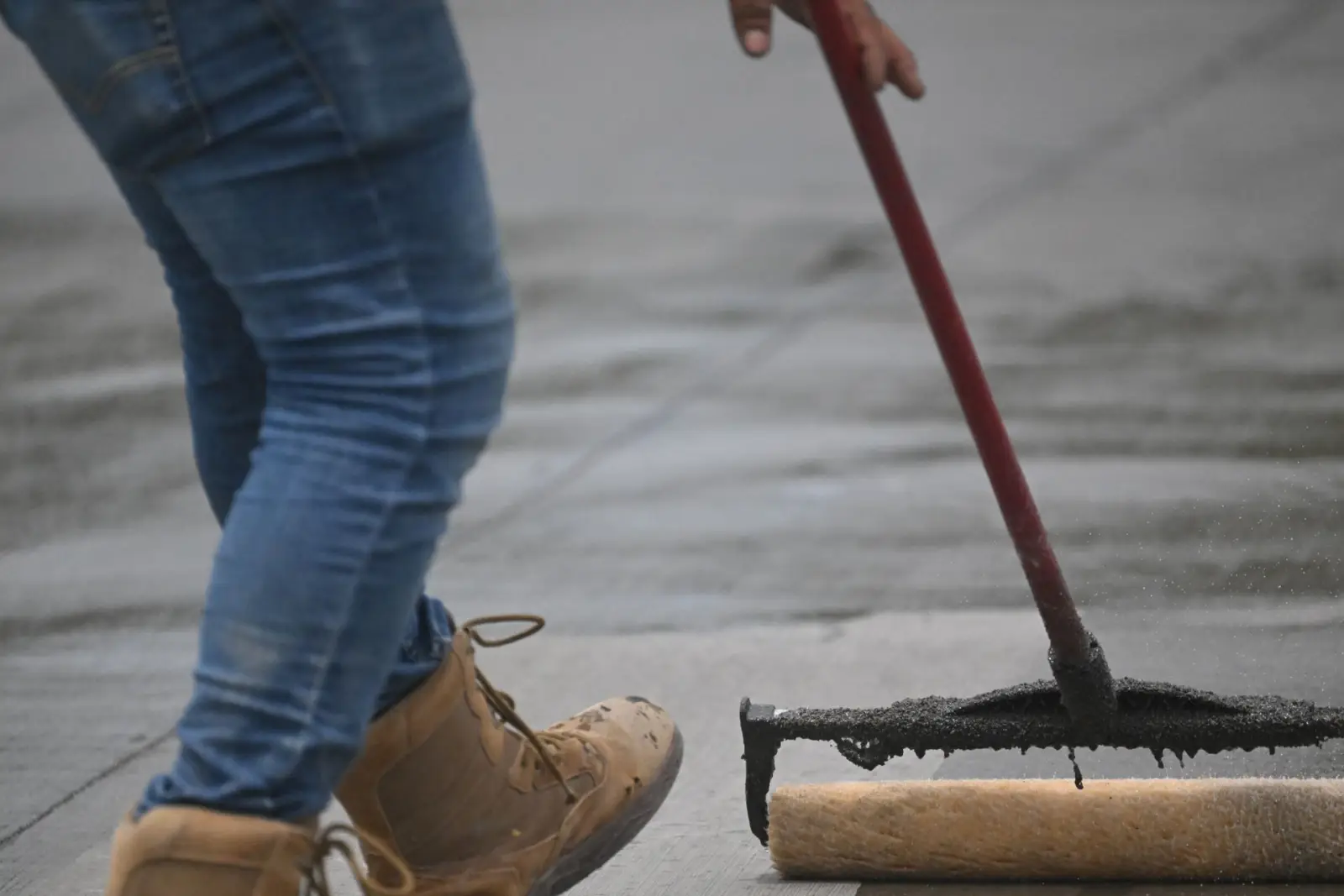
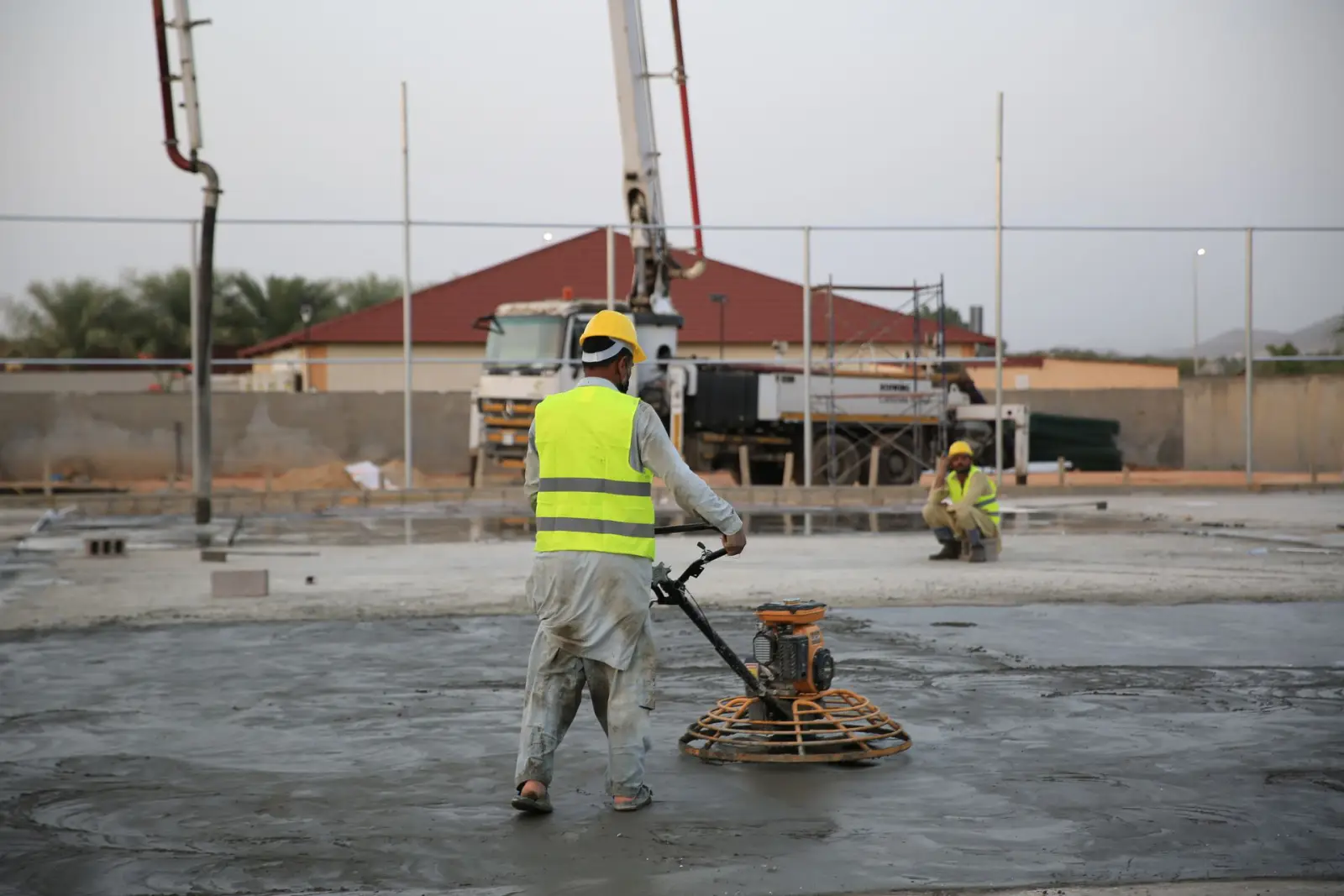
The overlay is mixed to the manufacturer's water ratio — over-watering a polymer-modified topping to make it easier to spread is the single most common way to end up with a weak, dusting surface — and placed to the specified thickness. Working time is short, particularly in warm or windy weather, which makes this a crew operation rather than a slow careful one. Texture goes on within that window: broom for traction, knock-down or spray for a patterned surface, stencil work or stamp mats for a decorative finish. Color is either integral in the mix or applied as the surface is worked. Then it cures, protected from sun, wind and rain, all three of which will ruin a thin topping that dries too fast. Sealer follows once the overlay is properly dry, and for exterior work in this climate it becomes a maintenance item — renewed on a cycle, or the finish goes flat.
What Does Concrete Resurfacing Cost in Duluth, MN?
- Square footage, and how much of the perimeter needs edge and transition detailing
- Substrate condition — how much scaled and delaminated material has to come off first
- Profiling method, since shot blasting a driveway is a different operation from grinding a patio
- Contamination removal, particularly oil and old sealers or coatings
- Crack and spall repair required before the overlay can go on
- Overlay system: a plain broom-finish topping versus a stencilled, textured or stamped decorative overlay
- Color method — integral, broadcast or applied — and how many colors
- Joint re-establishment through the new surface
- Sealer type, and whether an anti-slip additive is included on walking surfaces
Resurfacing costs a fraction of replacement for the same area, and the gap is widest where tear-out would be hardest — a back-yard patio with no equipment access, or a garage floor that would otherwise come out through one door. The number that varies most isn't the overlay material, it's the preparation, and preparation is most of the labor. A badly scaled and oil-stained driveway can cost more to prepare than to coat. The consideration worth naming plainly: an overlay quoted without a stability assessment is the one to avoid. It will look excellent for a year, and then every crack in the slab below will come through it, and the money will have bought a delay rather than a fix.
What to Look for in a Duluth Concrete Resurfacing Contractor
They check the slab before they show you colors
Resurfacing is only valid over stable concrete. A contractor who walks the slab with a straightedge, sounds it for delamination and talks about substrate strength before discussing finishes is doing the part that determines whether this works.
Profiling is named, and it isn't a pressure wash
Grinding, scarifying or shot blasting opens the concrete so an overlay can key in. Washing it does not. If a quote's surface preparation is a clean and a bonding agent, the bond is being left to chance.
Existing joints get carried through
An overlay poured across a control joint cracks along it within a season. Joints have to be re-established in the new surface. A contractor who raises this unprompted has watched an overlay fail and learned from it.
They'll say when replacement is the better buy
Some slabs shouldn't be overlaid, and saying so costs the contractor the job. That's exactly why it's the signal worth looking for — especially on a surface where an overlay would look perfect through the warranty period and fail after it.
Residential & Commercial Concrete Resurfacing
Residential
Residential resurfacing is mostly driveways and patios: a Duluth Heights drive scaled from years of salt but still dead level, a Woodland patio that's structurally fine and looks thirty years old, a garage floor that dusts every time it's swept. It's often the right answer for people who were told they needed replacement and didn't.
Commercial
Commercial resurfacing shows up on entry aprons, walkways, and interior floors where downtime is the binding constraint — an overlay can go down over a weekend where a replacement would close a space for weeks. Substrate assessment matters even more, since the traffic is heavier and a bond failure in a doorway is an immediate problem.
When Concrete Resurfacing Isn't the Right Call
- A slab that's still moving. Stepped cracks, settlement or heaving mean the base has failed, and an overlay follows whatever is under it. This is the one disqualifier that isn't negotiable, whatever the budget says.
- Concrete with a weak or dusting surface layer that can't be removed. An overlay bonded to a weak skin fails at that skin. If the top layer is compromised through its depth, replacement or a much thicker bonded topping is the real option.
- A driveway that needs its drainage changed. Resurfacing follows the existing grade, so a slab that pitches toward the garage will still pitch toward the garage under a beautiful new surface.
- Anyone who won't maintain sealer. Decorative overlays in this climate need re-sealing on a cycle. If that isn't going to happen, a plain broom-finished overlay or replacement will look better in year six.
- Work outside St. Louis, Carlton and Lake Counties. Overlay materials have narrow temperature and weather windows, and a crew has to be close enough to hit them.
Frequently Asked Questions
- How much does concrete resurfacing cost compared to replacement?
- Substantially less for the same area, because there's no demolition, disposal, excavation or base work. The gap is largest where tear-out would be hardest — a back-yard patio with no machine access, or a garage floor that has to leave through one door. Preparation is the variable that moves the number most, not the overlay material itself.
- How long does a concrete overlay last?
- It's tied to the slab underneath and to the preparation. Over stable concrete with proper profiling and bond, an overlay can last many years and be re-coated when it wears. Over a moving slab it can fail in a single season. The substrate assessment isn't a formality — it's the whole prediction.
- Will cracks come back through a resurfaced slab?
- Working cracks will, because an overlay a quarter inch thick can't bridge movement. That's why working cracks get honoured as joints in the new surface rather than filled and covered. Static shrinkage cracks that have finished moving can be repaired and overlaid without reappearing.
- Can a driveway be resurfaced if it's scaled?
- Usually yes, and it's one of the best applications. Scaling is a surface failure, not a structural one — the slab underneath is often perfectly sound. The loose scaled material has to be fully removed back to solid concrete first, and the overlay system has to be rated for vehicle traffic, not a foot-traffic decorative product.
- Does a resurfaced driveway hold up to plowing?
- A properly bonded overlay specified for vehicular use does, though a plow blade should be shoed up off the surface the same way it should be on any concrete driveway. Thin decorative toppings designed for patios will not survive a plow. Make sure the system being quoted is rated for the traffic it'll actually see.
- How soon can I use a resurfaced surface?
- Typically foot traffic within a day or so and vehicles after several days, depending on the specific system — polymer-modified overlays cure faster than conventional concrete. Sealer adds its own waiting period. The manufacturer's data sheet governs, and a contractor should give you those windows in writing before starting.
Learn More
- International Concrete Repair Institute — Technical guidelines on surface preparation and bond for overlays and repairs — the specifications behind the profiling requirements described above.
- ASCC Decorative Concrete Council — Industry guidance on decorative overlays, toppings and stamped resurfacing systems from the concrete contractors' trade body.
- ACI — Resistance to Cycles of Freezing and Thawing — What scaling is and why it happens at the surface rather than through the slab — the reason resurfacing is a valid answer so often in this climate.
Need Concrete Resurfacing in Duluth, MN?
Tell us what’s going on and get an on-site estimate — no charge for the visit, and no obligation to book the work.
Get My Free Estimate