Concrete Driveways in Duluth, MN — Residential & Commercial Driveway Contractors
New pours, full replacements, extensions and reinforced slabs, priced after somebody has actually looked at your grade and your soil. Estimates are free and there is no obligation to book the work.
Concrete Driveways in Duluth, MN
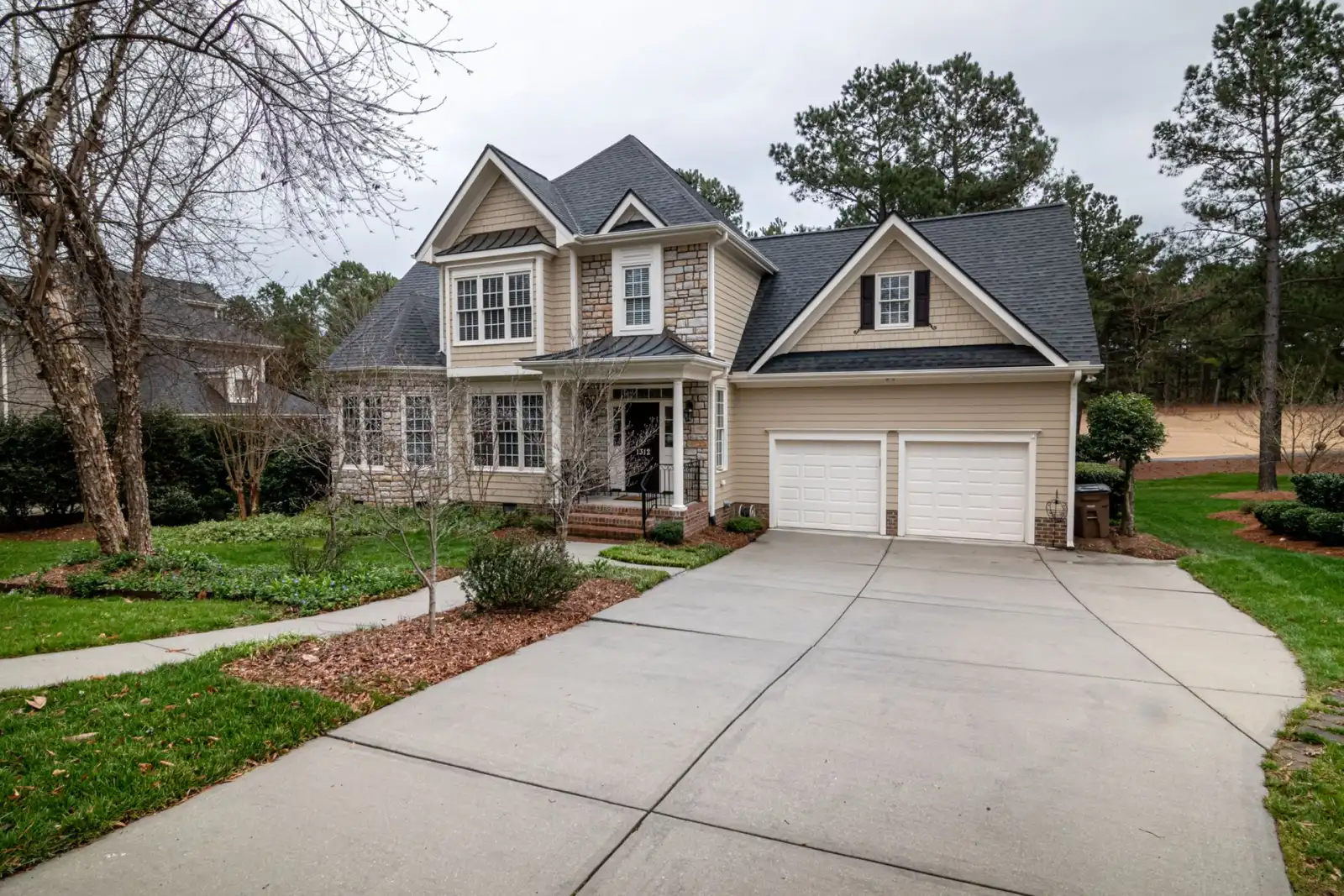
Duluth Premier Concrete is your local resource for concrete driveways throughout Duluth and St. Louis, Carlton & Lake Counties and the Twin Ports. We work with experienced concrete contractors who build for bedrock, hillside grades and a freeze-thaw cycle that runs most of the year.
A driveway in this city is a ground problem before it is a concrete problem. On the hillside above London Road, gabbro ledge sits close enough to the surface that a Congdon Park tear-out can turn into rock work eighteen inches down. Down in the flats around West Duluth and Morgan Park, the issue flips: fill of unknown age and depth, which has to be dug out and rebuilt rather than compacted in place. Neither one shows up on a phone quote. Both change the price.
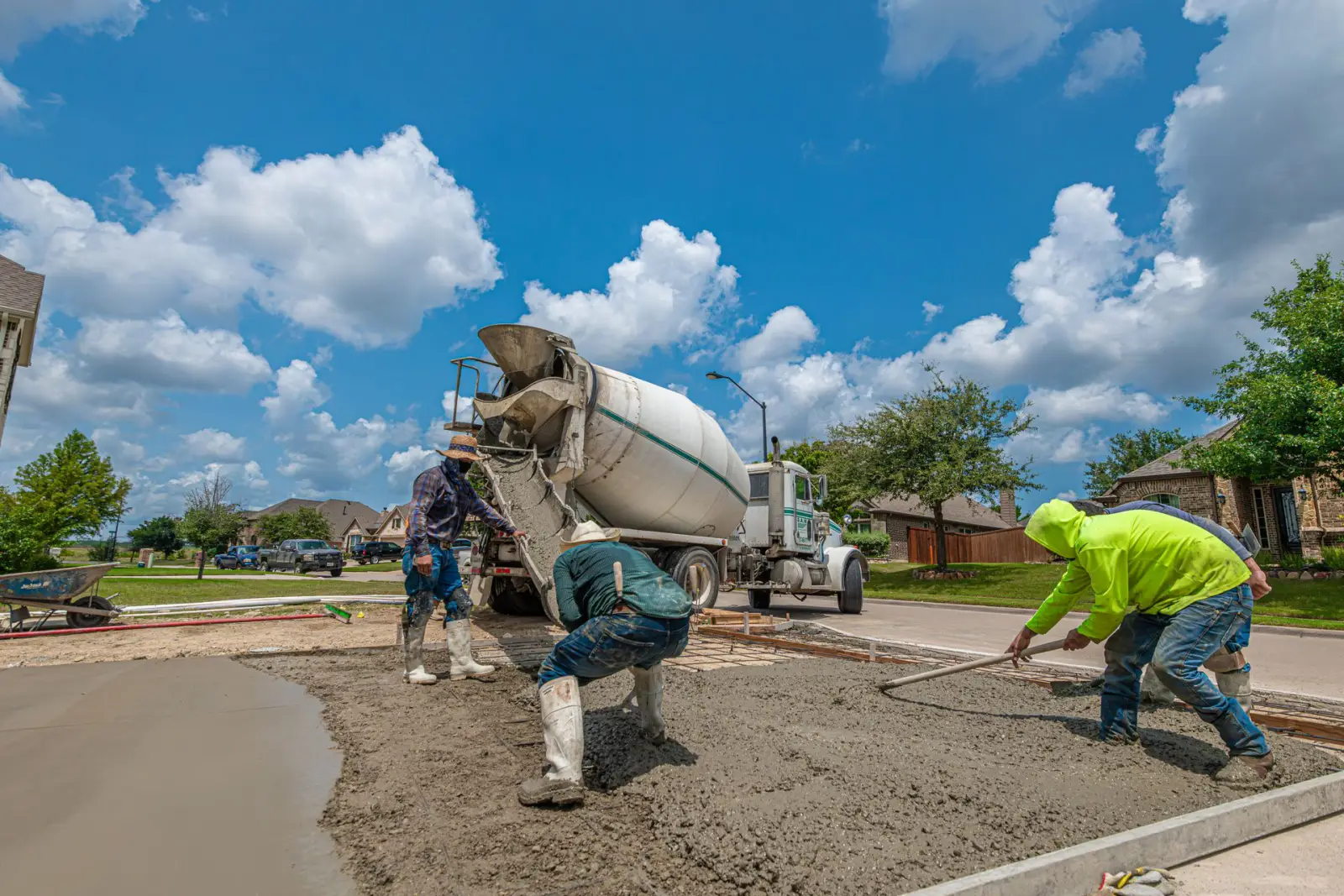
The concrete itself is the straightforward half. Exterior flatwork here wants a 4,000 psi mix with air entrainment in the 5 to 8 percent range, which is what gives the paste somewhere to push when the water in it freezes. Four inches of concrete over four inches of compacted Class 5 aggregate handles cars and light trucks; six inches, or #4 rebar on chairs instead of fiber mesh, is the conversation when an RV or a delivery truck is part of the picture. Then the joints get saw-cut within the first day, because the slab is going to crack and the only real decision is whether it cracks on a line somebody chose.
What's Included in a Duluth Concrete Driveway Quote
- Tear-out and haul-off of the existing driveway, including the apron at the street
- Excavation to depth, plus rock removal where ledge turns up shallower than expected
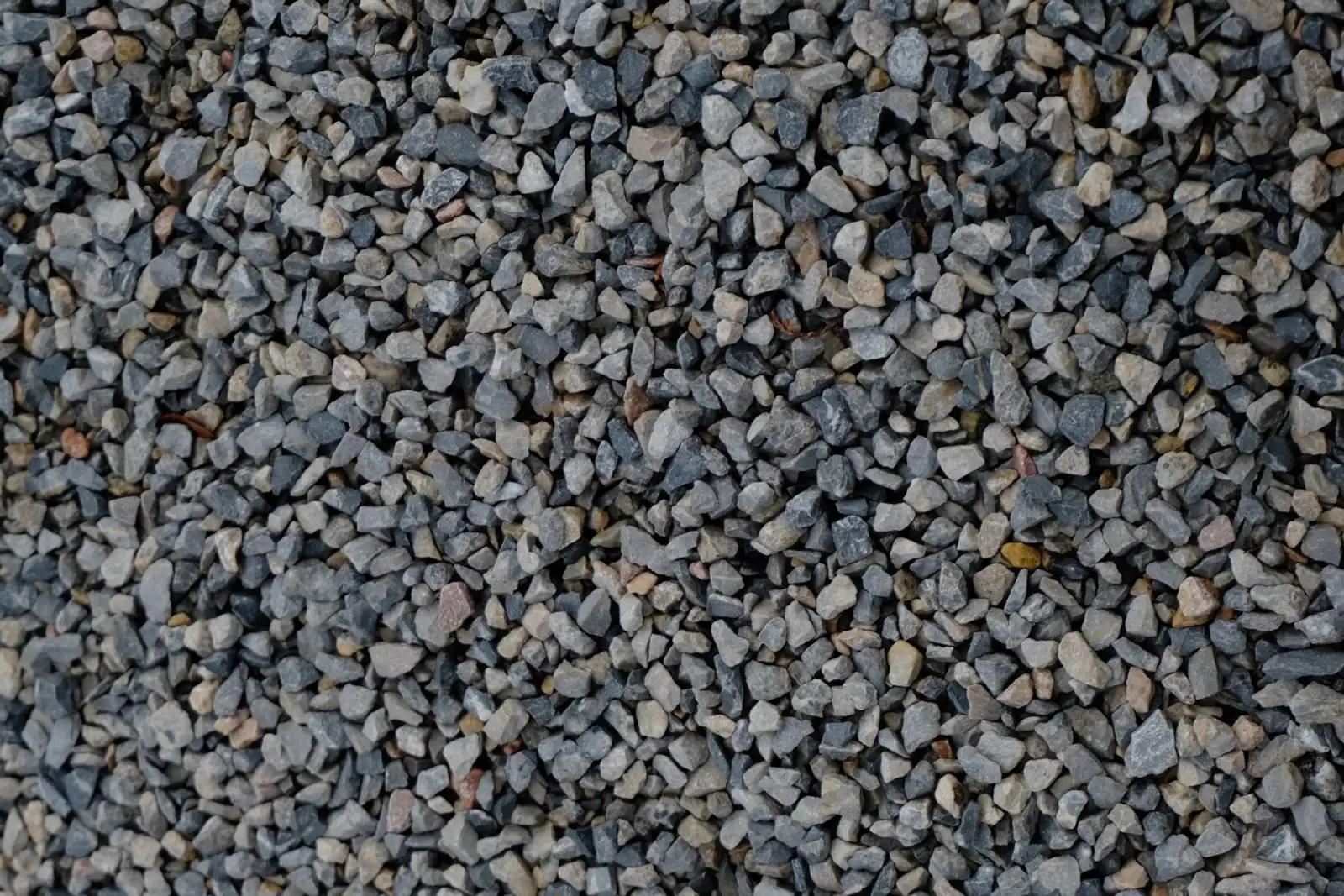
- Four inches of compacted Class 5 aggregate base, placed and compacted in lifts rather than dumped and graded
- 4,000 psi air-entrained exterior mix, with the air content specified on the ticket instead of assumed
- Fiber mesh or #4 rebar on chairs, sized to what the driveway actually carries
- Forming to a grade that moves water off the slab and away from the foundation
- Screeding, floating and a broom finish run across the slope, not down it
- Saw-cut control joints within the first day, cut to a quarter of the slab thickness
- Expansion joint material where the driveway meets the garage slab and the public sidewalk
- Curing compound, and a written no-salt-the-first-winter instruction that people actually need
Concrete Driveway Installation in Duluth, MN
New Concrete Driveway Installation
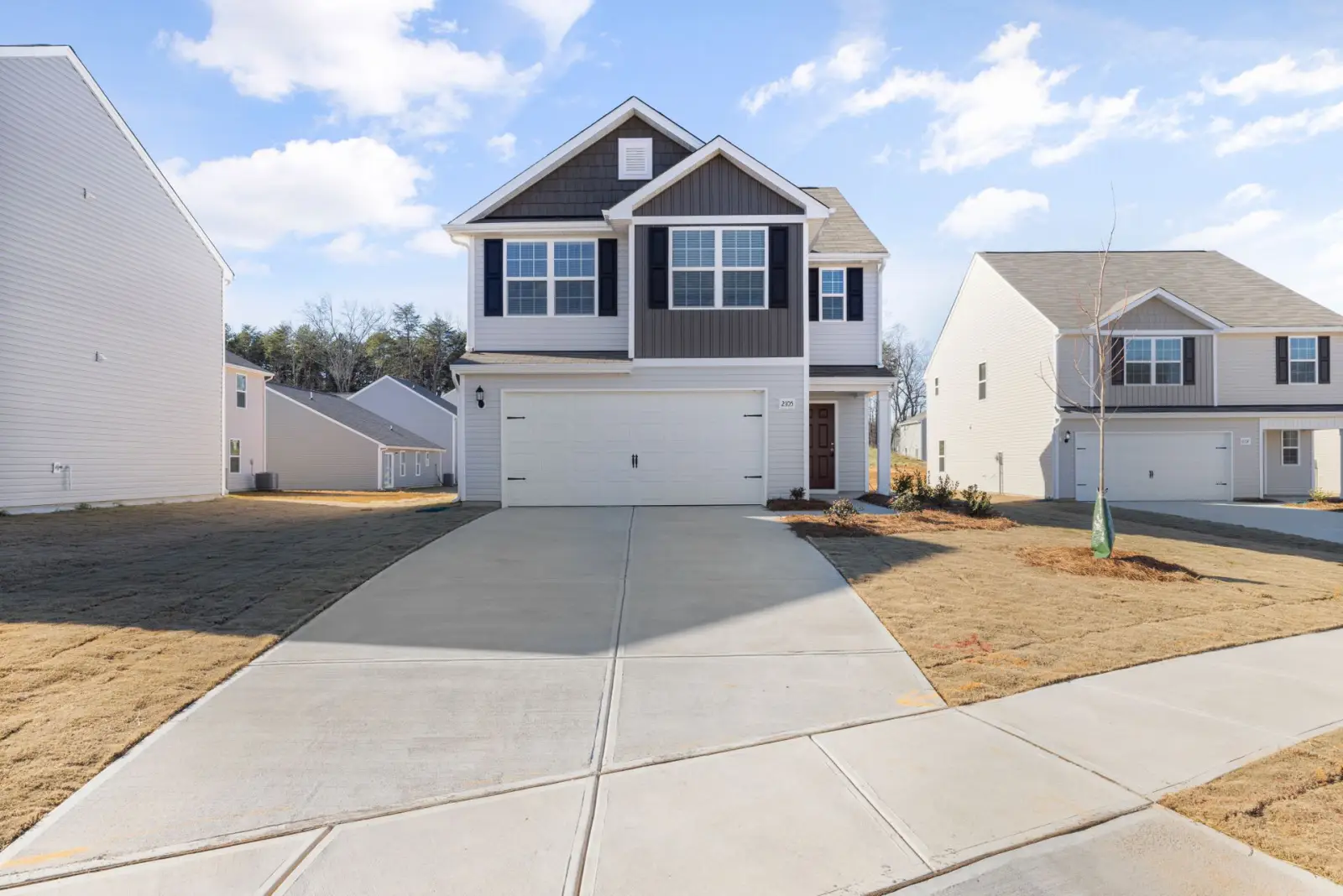
A first-time driveway on a lot that has been gravel, grass or two ruts of packed dirt. This is the version where subgrade work dominates the schedule: strip the organics, cut to depth, deal with whatever the excavator finds, then build the base back up in compacted lifts. On a new-construction lot the fill is usually recent and poorly compacted, so it either gets re-compacted properly or dug out and replaced — settling under a slab shows up as a crack within two winters. Layout matters more than people expect. The width of the approach, the turning radius off the street, and where the water goes once the driveway is a hard surface are all decisions made before the forms go down, and all of them are cheaper to get right the first time than to cut out and redo.
Concrete Driveway Replacement
Tearing out a failed slab and pouring a new one. The tear-out is real work — a four-inch residential driveway runs roughly 55 pounds per square foot, so a two-car driveway is several tons of broken concrete that has to be loaded and hauled, and the disposal cost is a line item, not a rounding error. The part that decides whether the new slab lasts is what happens after the old one is gone. An old driveway that cracked and settled was usually telling you something about the base underneath it, and pouring fresh concrete over the same unrepaired subgrade reproduces the same failure on a new schedule. Expect the base to be re-excavated and rebuilt wherever the old slab had settled, not just skimmed and re-graded.
Concrete Driveway Extensions & Widening
Adding a parking pad, widening a single-wide drive to hold two cars side by side, or extending a driveway back toward a garage or shop. The technical issue is the joint between old concrete and new. The two slabs are different ages, different mixes, and they will move independently, so the seam gets an isolation joint rather than a bond attempt — trying to tie new concrete into a twenty-year-old slab produces a crack along the seam instead of a joint. Matching color is the other honest conversation. New concrete cures lighter and stays lighter for a year or more, and it will never exactly match a weathered slab. Where the difference would bother you, pouring the extension as a visibly separate element, with its own border or a different finish, reads as a design choice instead of a patch.
Reinforced Concrete Driveways
Fiber mesh handles shrinkage cracking in a standard residential slab and is included in most quotes. Rebar is a different job: #4 bar on chairs, on a grid, holds the two halves of a crack together and keeps a slab working as a structural unit once it does crack. That matters when the load goes up — a motorhome, a boat trailer, a contractor's truck, a dumpster set down for a remodel — or when the subgrade is fill that can't be fully trusted no matter how well it's compacted. Reinforcement is not a substitute for base prep, and anyone selling it that way is selling the wrong thing. Steel in a slab over a bad base buys you a crack that stays flat instead of a crack that steps. That is worth real money, but it is a different promise than a driveway that doesn't crack.
Concrete Driveway Finishes & Design Options
A broom finish is the default for good reason: it holds traction when wet and it holds it when iced, which is most of the year here. The broom should run across the slope rather than down it, so the grooves catch a foot rather than channeling water. Beyond that, exposed aggregate gives more grip and more texture at a higher price, and it hides staining better than smooth grey. Saw-cut borders and banding turn the required control joints into a layout instead of a set of lines nobody planned. Integral color and stamping are available on driveways, with a real caveat: any sealed decorative surface needs its sealer maintained, and a driveway is the one slab on the property that gets plow blade, tire chains and whatever the city put down on the street last night.
Concrete vs. Asphalt Driveways in Duluth
Up-front cost
Asphalt is cheaper to install and that gap is real, not marketing. HomeBlue puts un-reinforced concrete driveways in Duluth at $7 to $12 per square foot and reinforced concrete at $8 to $14; asphalt typically lands under that. If the budget is the binding constraint this year, asphalt is the honest answer and nobody should talk you out of it.
Lifespan and maintenance
Asphalt needs sealcoating every few years and softens in direct summer sun; concrete needs joints maintained and no de-icing salt, particularly the first winter while it is still gaining strength. Over a long enough horizon concrete generally costs less per year, but that math only works if the base was built right — a concrete driveway on a bad base is the most expensive option on this list.
Grade and freeze-thaw
On a steep hillside drive, asphalt is more forgiving of small subgrade movement and easier to patch. Concrete holds a crisper edge and a cleaner grade, and a broom finish across the slope gives better winter footing than asphalt does. Neither material is immune to frost heave; both depend entirely on drainage and base.
Repair economics
Asphalt patches cheaply and the patch always shows. Concrete does not patch invisibly at all, but individual panels can be cut out and replaced where the joint layout allows, which contains the cost of localized damage instead of spreading it. On a driveway with no planned joints, that option mostly disappears.
Signs You Need a New Concrete Driveway
- Cracks wider than about a quarter inch, or cracks where the two sides no longer sit level with each other
- A section that has settled enough to pond water, which then freezes into a sheet exactly where you walk to the car
- The apron at the street has dropped away from the slab, leaving a lip that catches a plow blade or a shovel
- Surface scaling — the top layer flaking away in sheets or patches, usually from de-icing salt
- Pop-outs: small cone-shaped craters where an aggregate particle near the surface absorbed water and burst
- The slab has heaved at a joint and no longer drains away from the garage or the foundation
- Patching has become annual, and the patches are now failing faster than the original concrete did
- You are adding a vehicle, a camper or a shop the current driveway was never built to carry
How a Concrete Driveway Pour Works
- 1
Site visit, grade check and soil call
Nothing gets quoted from a satellite photo. The visit establishes three things that set the price: what the existing surface is and how much of it has to come out, where water currently goes and where it needs to go instead, and what is under the slab. On the hillside, the last one is the wild card — gabbro and basalt ledge sit close to the surface through much of Duluth's upper neighborhoods, and hitting rock at eighteen inches turns an excavation into rock work with a hammer attachment. In the lower flats the risk inverts to deep, uncontrolled fill that has to be excavated and rebuilt. Access gets measured too: a truck needs a path, a steep or narrow lot may need the concrete pumped or wheeled, and both change the number. Expect the estimate to name which of these applies to your lot rather than quoting a flat per-square-foot rate.
- 2
Tear-out, excavation and subgrade repair
The old slab is broken out and hauled off, including the apron where it meets the street. Then the excavation goes to depth — enough for the slab plus the full base thickness, not just enough for the concrete. This is the step where the reason the old driveway failed becomes visible: a soft spot, a buried stump hole, an old utility trench that was backfilled loose, a downspout that has been discharging under the slab for fifteen years. Each of those gets fixed now, because the base cannot correct a subgrade problem underneath it. Organic material comes out entirely; topsoil under a slab decomposes and leaves a void. Where the subgrade is soft and can't be dried out and compacted, it gets over-excavated and replaced with granular fill rather than bridged over and hoped about.
- 3
Base, forms and reinforcement
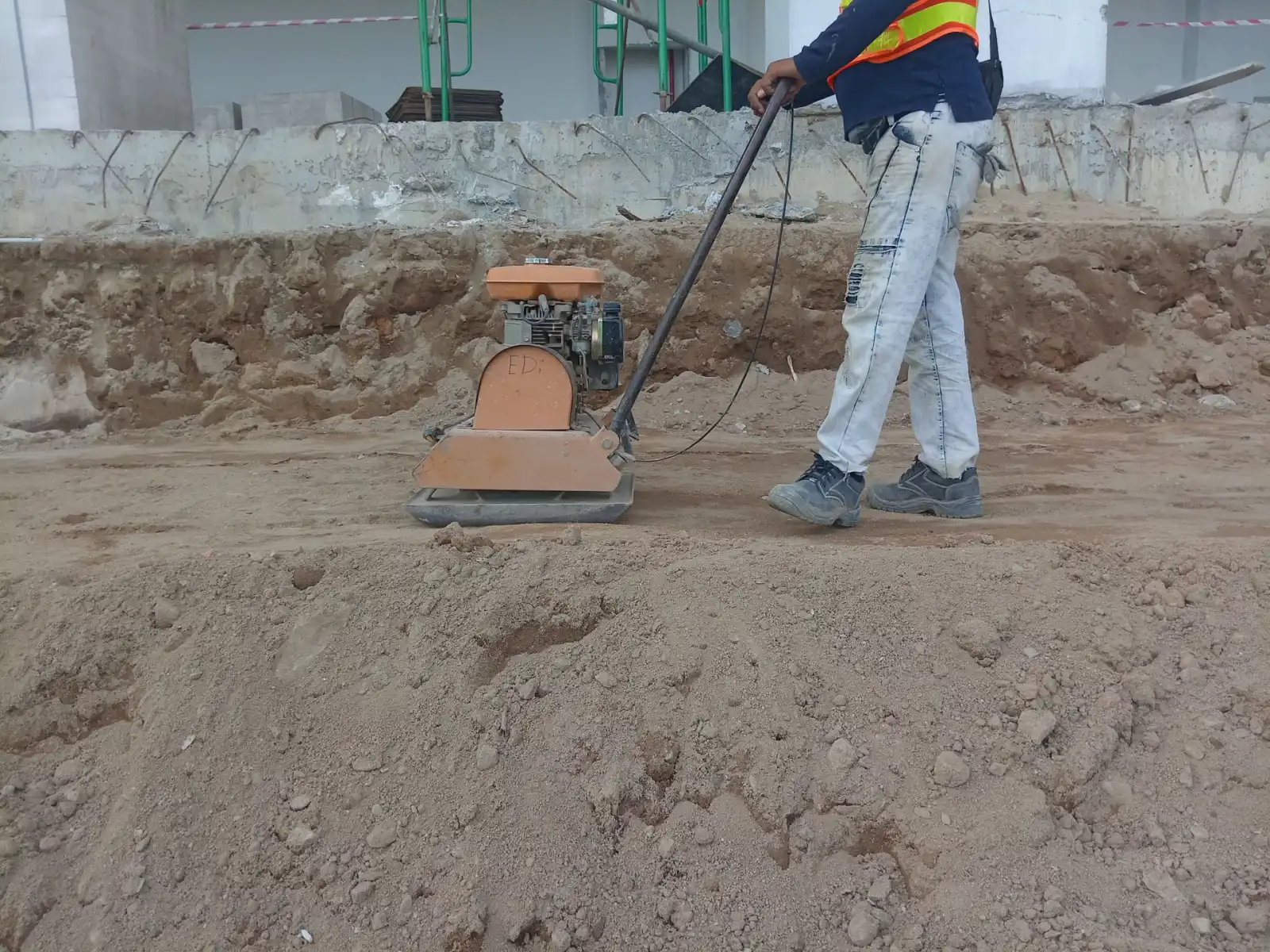
Four inches of Class 5 aggregate goes down and gets compacted in lifts — two passes of two inches beats one pass of four, because a plate compactor's energy only reaches so deep. Compaction is what makes a base a base; loose aggregate spread to grade is just gravel waiting to move. Forms are set next, and this is where the grade gets locked in: the slab has to shed water away from the house and off the driveway, with enough fall to actually move water but not so much that the surface feels wrong to walk on. Reinforcement goes in last — fiber mesh mixed into the concrete, or #4 rebar tied into a grid and lifted onto chairs so it sits in the middle of the slab rather than lying on the base doing nothing. Steel on the ground is a common shortcut and it is worth looking for.
- 4
Pour, finish, joints and cure
Concrete is placed, screeded to the forms, and bull-floated to close the surface. Then it waits. Finishing too early traps bleed water at the surface and produces a weak skin that scales off in a few winters, so the crew's timing here matters more than their speed. The final pass is a broom finish run across the slope for traction. Control joints are saw-cut within the first day, at roughly two to three times the slab thickness in feet — about 10 to 12 feet apart on a four-inch slab, per ACI 360R — and cut a quarter of the slab depth so the crack has somewhere to go. Expansion joint material separates the driveway from the garage slab and the public sidewalk. Curing compound goes on to hold moisture in, and the slab stays off-limits to vehicles for the better part of a week. Then the real instruction: no de-icing salt the first winter, and ideally never.
What Do Concrete Driveways Cost in Duluth, MN?
- Square footage, and how much of it is a simple rectangle versus curves, aprons and turnarounds
- Whether an existing driveway has to be torn out, plus disposal weight — roughly 55 pounds per square foot at four inches
- Slab thickness and reinforcement: four inches with fiber mesh, or six inches with #4 rebar for heavier vehicles
- Subgrade condition — whether the base can be rebuilt in place or the soil has to be over-excavated and replaced
- Rock. Ledge close to the surface on the hillside means hammer work, and it is the single biggest swing factor on an upper-neighborhood lot
- Grade and access: a steep or narrow site the truck can't reach means pumping or wheeling the concrete
- Finish choice — broom, exposed aggregate, saw-cut borders, integral color or stamping
- Drainage work the driveway makes necessary, from a regraded swale to a trench drain at the garage
HomeBlue puts un-reinforced concrete driveways in Duluth at $7 to $12 per square foot and reinforced concrete at $8 to $14, with demolition of an existing driveway adding roughly $1.40 to $2.30 per square foot. Treat those as a starting bracket, not a quote — they describe a flat lot with normal soil, and the two things most likely to move your number away from them are rock and bad fill, neither of which anybody can price from the street. The risk worth naming: a quote that comes in well under that range usually got there by thinning the base, skipping the compaction lifts, or planning to pour over the existing slab. All three save money now and cost the whole driveway later.
What to Look for in a Duluth Concrete Driveway Contractor
They talk about the base before the finish
A contractor who leads with stamp patterns and color charts and never mentions subgrade, compaction lifts or Class 5 depth is selling the part you can see. The part that decides whether the driveway is still flat in ten years is under it.
The joint plan is on the estimate
Ask where the control joints go and when they get cut. A real answer names a spacing and a timeline — saw-cut within the first day, roughly 10 to 12 feet apart on a four-inch slab. No answer means the joints will be an afterthought, and the slab will pick its own.
Air entrainment is specified, not assumed
Exterior concrete in a freeze-thaw climate needs entrained air, typically 5 to 8 percent. It is ordered on the ticket from the plant. A crew that can tell you what they order is a crew that has thought about your winter.
Fixed quotes decided on-site
Rock and fill are the two things that blow up a driveway budget, and both are found on the ground, not on a map. A quote written after somebody has walked your grade is worth more than a cheaper one written over the phone.
Residential & Commercial Concrete Driveways
Residential
Most driveway work here is residential: a Lakeside slab that has scaled from twenty years of salt, a Piedmont Heights drive on a grade steep enough to change the pour order, a Duluth Heights rambler adding a second parking pad. Scheduling is the constraint nobody likes. The pour season runs roughly seven months, which is why everyone wants their driveway done the same week in June.
Commercial
Commercial driveway and apron work — a multi-tenant building's entrance, a small lot's approach, a dumpster pad and its access lane — carries different constraints: phasing so tenants keep a usable entrance, thicker slabs and heavier reinforcement for delivery trucks, and work windows outside business hours. That scope overlaps with commercial flatwork more than with residential driveways.
When a Concrete Driveway Isn't the Right Call
- One cracked panel with no settlement and no trip hazard. If the two sides are still level and water still drains, a crack in a driveway is cosmetic. Clean it, fill it with a flexible sealant, and spend the money somewhere it matters.
- An asphalt driveway that is doing fine. Asphalt is cheaper up front and easier to patch, and converting to concrete for its own sake is a want, not a need. If the asphalt is sound, sealcoat it and revisit in five years.
- A pour somebody wants scheduled in February. Concrete needs temperatures that let it cure, and cold-weather placement means blankets, heated enclosures and admixtures that cost real money for a worse result. Book for the pour season instead.
- A budget that covers concrete but not tear-out and haul-off. Pouring a thin overlay across a failed driveway to stay in budget produces a surface that delaminates. Waiting a season and doing it once is cheaper than doing it twice.
- A property outside St. Louis, Carlton and Lake Counties. Beyond that, you want somebody local to your own frost depth and soil, not a crew driving two hours with a truck full of assumptions.
Frequently Asked Questions
- How much does a concrete driveway cost in Duluth?
- HomeBlue's Duluth figures put un-reinforced concrete at $7 to $12 per square foot and reinforced at $8 to $14, with tear-out of an existing driveway adding about $1.40 to $2.30 per square foot. Those brackets assume a normal lot. Shallow bedrock on the hillside or deep uncontrolled fill in the flats can move the number well outside them, which is why the estimate happens on-site.
- How thick should a concrete driveway be here?
- Four inches over four inches of compacted Class 5 base is standard for cars and light trucks. Go to six inches, and to #4 rebar on chairs instead of fiber mesh, when an RV, a boat trailer or regular delivery-truck traffic is part of the picture. Thickness is a load question, not a climate question — the climate question is answered by air entrainment and drainage.
- How deep do footings and frost work go in Duluth?
- St. Louis and Carlton Counties both require a minimum 60 inches from grade to the bottom of a footing, versus 42 inches in most of the rest of Minnesota. That applies to foundations and to anything structural. A driveway slab is not founded below frost — it floats — which is exactly why its base and drainage carry the whole load of keeping it flat.
- When can I drive on a new concrete driveway?
- Foot traffic after a day or two, cars after about a week, and heavy vehicles closer to a month. Concrete keeps gaining strength for weeks after it stops looking wet. Parking a loaded truck on a five-day-old slab is one of the more common ways a brand-new driveway picks up a crack.
- Can I use de-icing salt on a new driveway?
- Not the first winter, and preferably not after that. Salt drives freeze-thaw cycling at the surface and is the main cause of the scaling you see on older Duluth driveways. Sand gives traction without the chemistry. If you must melt something, a magnesium chloride product is less aggressive than rock salt, but nothing is truly safe for young concrete.
- Why does new concrete crack, and is that a defect?
- Concrete shrinks as it cures and it cracks — that is a material property, not a workmanship failure. The job of the control joints is to decide where. A crack that follows a saw-cut joint is the system working. A random crack across the middle of a panel, or one where the slab has stepped out of level, is a base or joint-spacing problem and worth a look.
Learn More
- NRMCA — Criteria for Freeze-Thaw Resistant Concrete Mixtures — The national ready-mix association's technical guidance on air content and mix design for concrete exposed to freezing, which is where the 5 to 8 percent range comes from.
- City of Duluth — Residential Code Requirements Summary — The city's own handout, including the 60-inch minimum depth from grade to the bottom of a footing that applies in St. Louis County.
- ACI — Resistance to Cycles of Freezing and Thawing — The American Concrete Institute on why entrained air protects concrete through freeze-thaw cycling, and what happens to concrete that doesn't have it.
Need a Concrete Driveway in Duluth, MN?
Tell us what’s going on and get an on-site estimate — no charge for the visit, and no obligation to book the work.
Get My Free Estimate