Decorative Concrete in Duluth, MN — Colored, Textured & Patterned Finishes
Color, texture, borders and banding on flatwork that still has to survive a northern winter. Finishes chosen for how they age here, not how they photograph elsewhere.
Decorative Concrete Services in Duluth, MN
Duluth Premier Concrete is your local resource for decorative concrete throughout Duluth and St. Louis, Carlton & Lake Counties and the Twin Ports. We work with trusted concrete finishers who pick finishes for how they hold up through a Northland winter.
Decorative concrete is the broad category — color, texture, pattern and borders applied to flatwork that would otherwise be plain grey. Stamping is one technique within it and gets its own page because the search intent behind it is genuinely separate. Everything else lives here: integral and applied color, exposed aggregate, textured and tooled finishes, saw-cut patterns, banding and borders, and the combinations of those that make a slab look designed rather than poured.
Two things shape which of these make sense in this climate. The first is that any finish depending on a surface film needs that film maintained, and a surface under snow for four months with salt tracked across it is hard on films. The second is that texture is not just decoration here — a slab you walk on in January wants grip, which quietly makes exposed aggregate and coarse tooled finishes the practical favorites rather than the smooth polished looks that photograph well in warmer markets. The best decorative work in this region tends to be the kind that gets better as it weathers rather than the kind that depends on looking new.
What's Included in a Duluth Decorative Concrete Quote
- Base and slab built to full exterior standard — compacted Class 5, 4,000 psi mix at 5 to 8 percent entrained air
- Reinforcement sized to the application, on chairs at mid-depth
- Integral color batched at the plant, or color hardener broadcast and floated into the surface
- Exposed aggregate finishing, including surface retarder and wash-off timing
- Textured and tooled finishes: rock salt, swirl, heavy broom, travertine and float textures
- Saw-cut patterns, banding and borders laid out as part of the joint plan rather than added to it
- Contrasting borders in a different color, texture or aggregate
- Accent staining and antiquing where specified
- Control joints placed to work with the pattern instead of cutting across it
- Cure and sealer where the finish requires it, plus a written maintenance schedule
Decorative Concrete Services in Duluth, MN
Colored Concrete
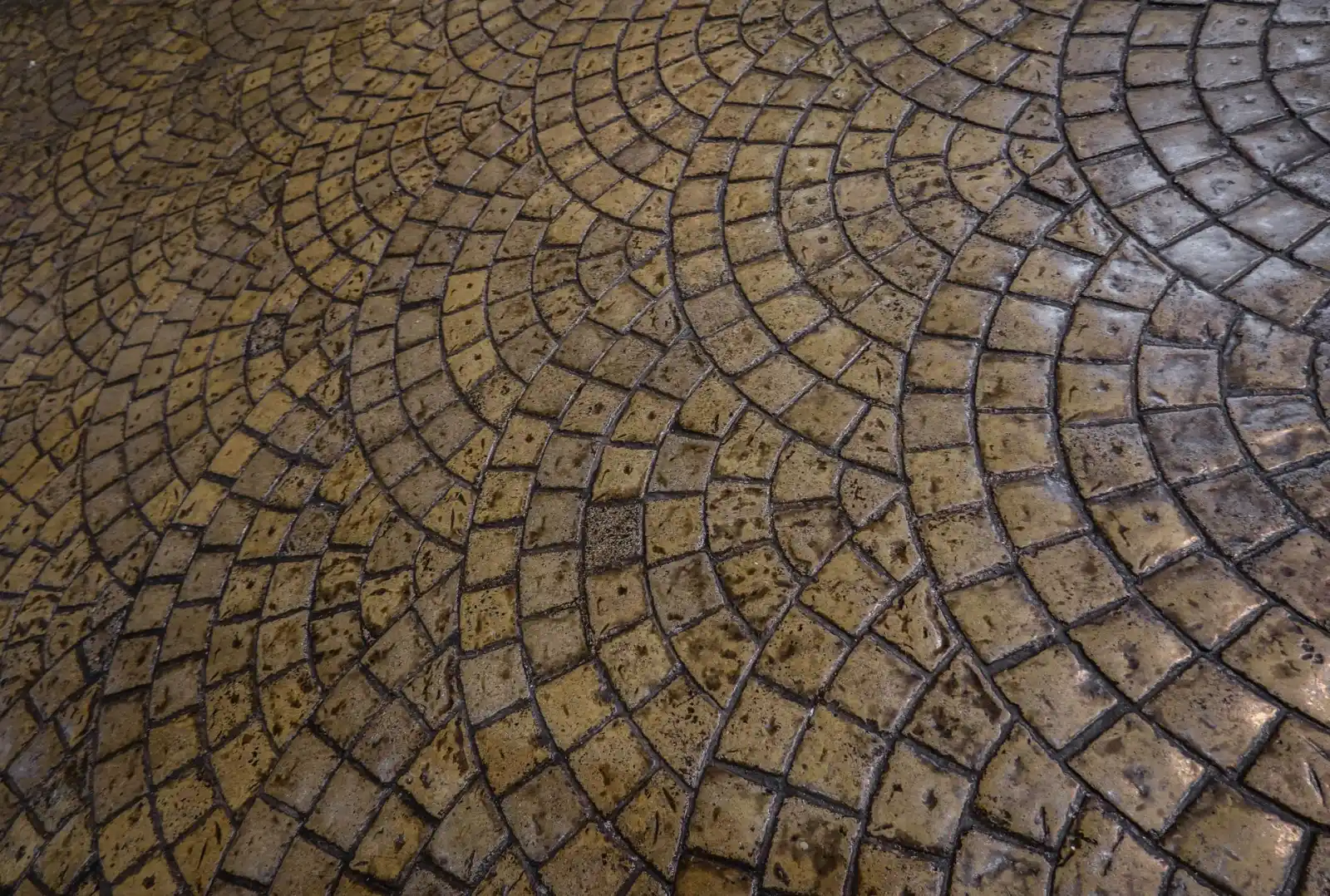
Color arrives in a few ways and they behave very differently over time. Integral color is a pigment batched into the mix at the plant, so it runs through the full depth of the slab — a chip or a wear point exposes the same color rather than grey underneath, which makes it the durable choice for anything that will see traffic or a shovel. Its limitation is saturation: integral pigment can only go so dark before the cost climbs steeply, so deep, rich tones usually need help. Color hardener supplies that, broadcast onto the fresh surface and floated in, producing both stronger color and a denser, harder-wearing top layer. Acid stains and water-based stains are applied after the concrete has cured and react with or sit in the surface, which gives variegated, mottled effects but puts the color entirely in the top fraction of a millimetre. In this climate that means the sealer is doing real work.
Textured Concrete Finishes
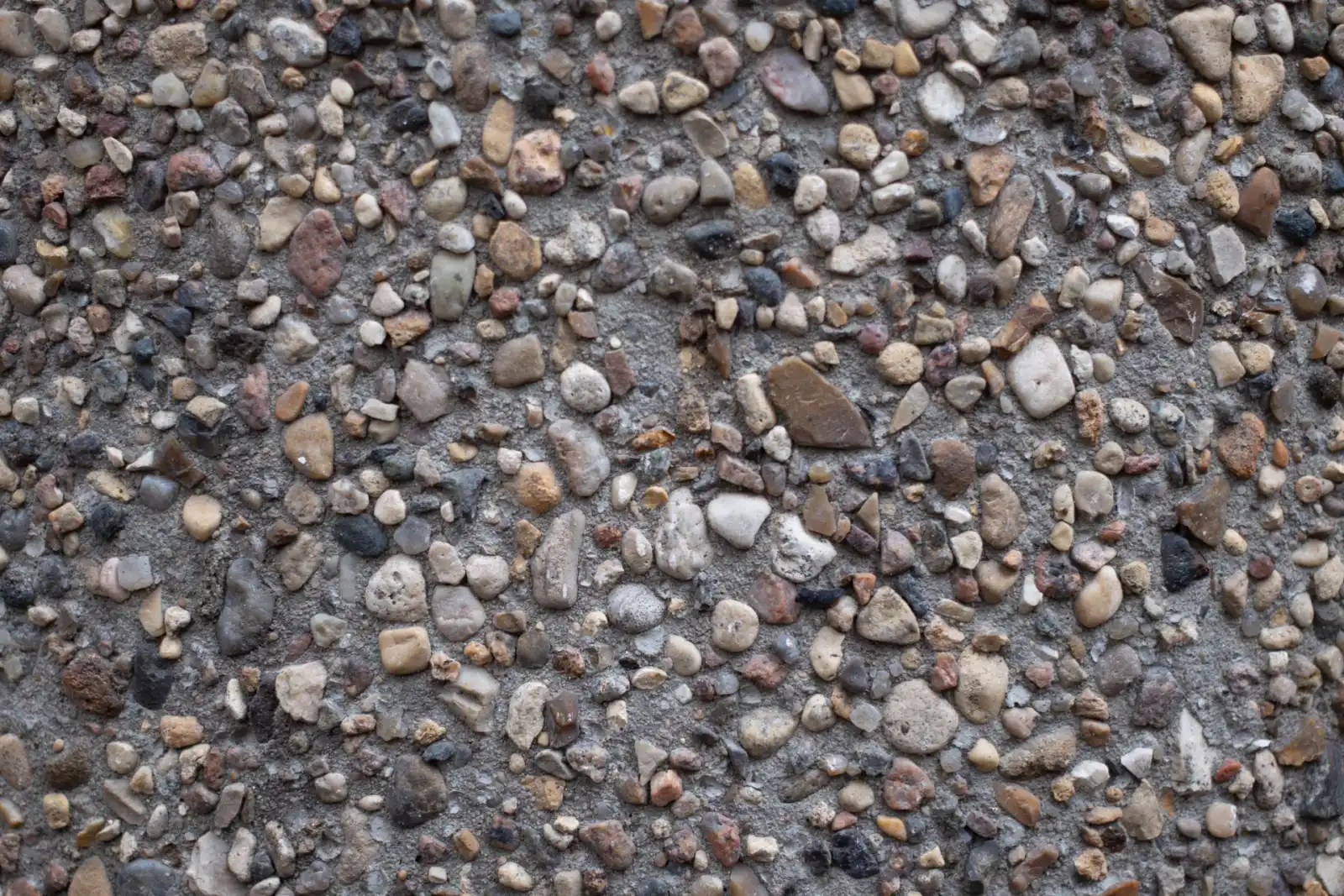
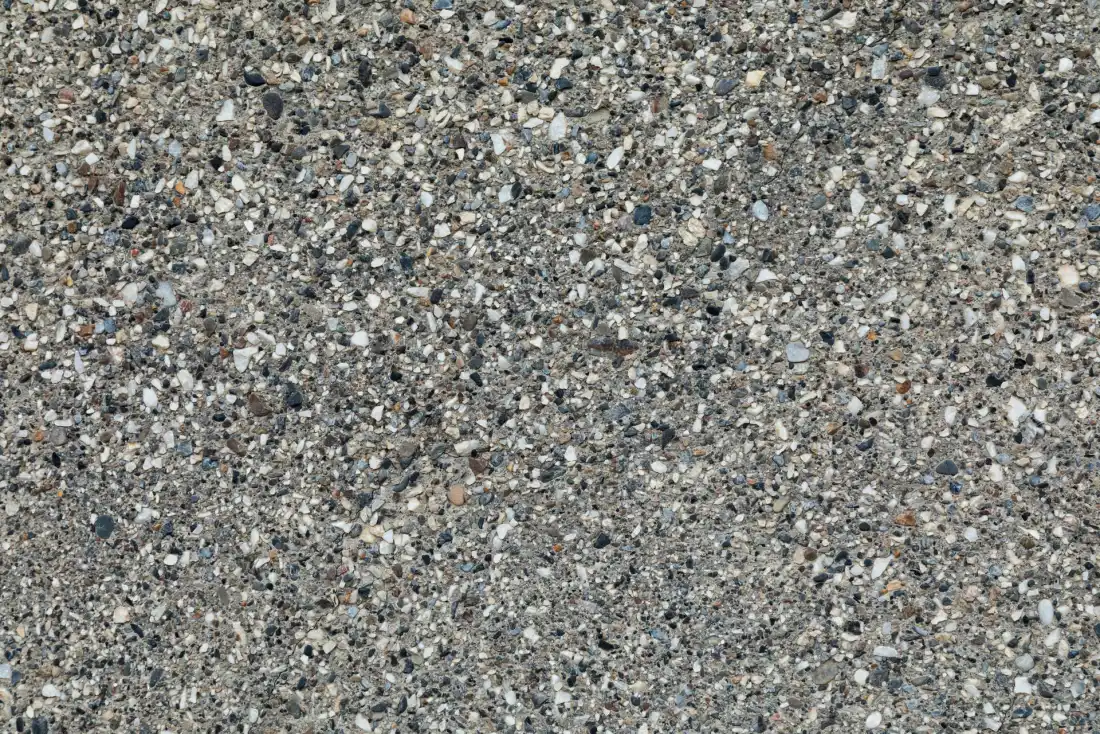
Texture is where decorative concrete and winter practicality overlap, which is why it's the category worth spending on here. A heavy broom finish is the baseline and it's genuinely good — cheap, high-grip, and it ages without looking worn. Beyond it, a swirl or fan float finish leaves an arced pattern that reads as deliberate and holds traction. Rock salt finish, made by broadcasting coarse salt onto the fresh surface and washing it out after cure, leaves a pitted texture with real grip; it's a classic look, though the pits do hold water, which is worth thinking about on a surface that freezes. Travertine and other hand-tooled finishes use a texture skin or hand work to produce a stone-like surface with no repeating pattern, which ages more gracefully than a stamp because there's nothing to date. All of these avoid the main hazard of decorative work in a cold climate: a slick surface under ice.
Decorative Concrete Patios
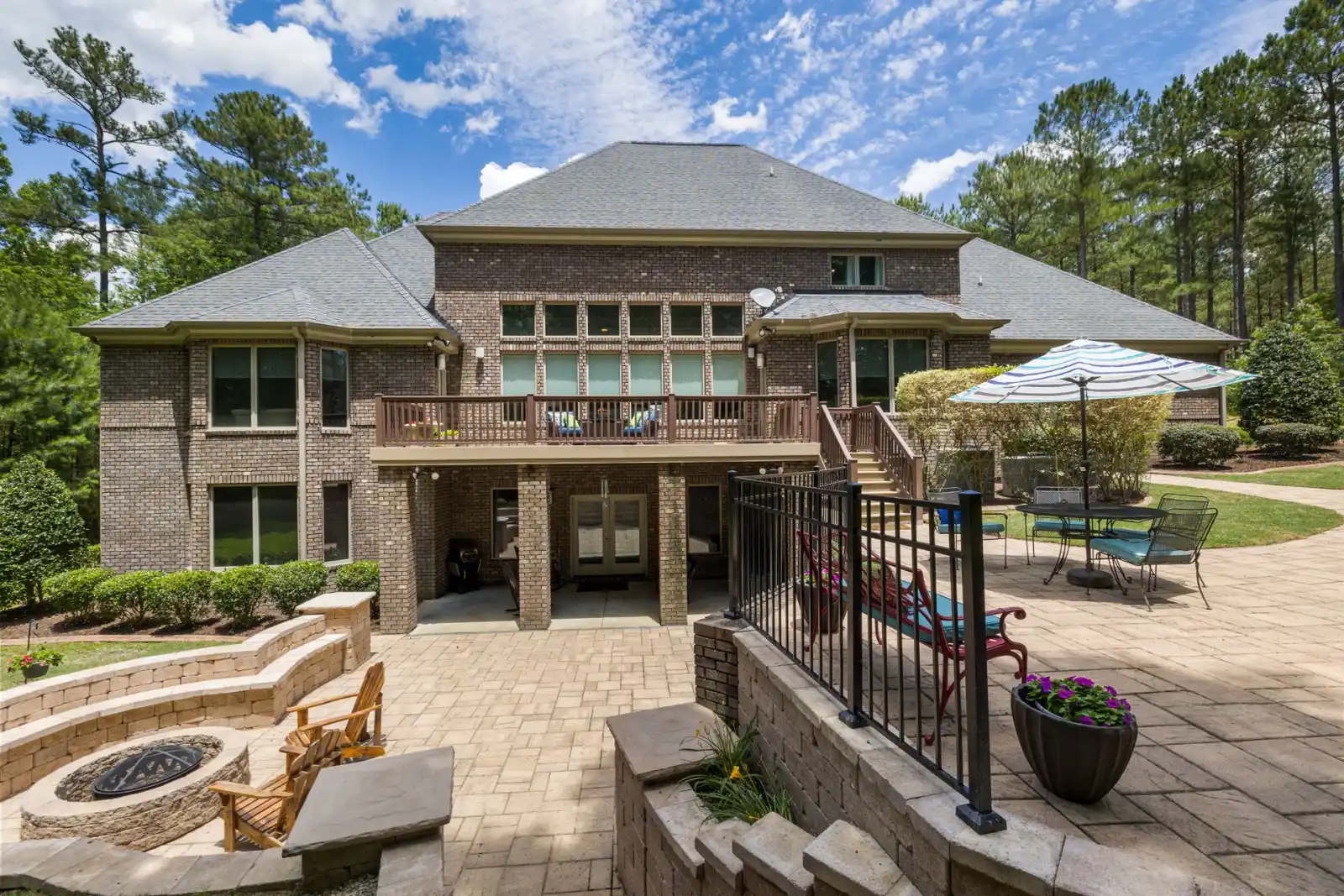
A patio is the best place on a property to spend decorative money, because it has no vehicles, no plow, and an owner who looks at it every day in summer. The combination that works most reliably here is an integral-colored slab in a warm grey or tan, with an exposed aggregate or heavy-textured field and a contrasting smooth or differently-colored border. That gives visual structure without depending on a pattern that will look dated, and it keeps grip where people walk. Multi-level patios on a hillside lot get an extra decorative opportunity, since each level can carry a slightly different treatment and the steps between them become a design element. The maintenance conversation is the same as always and should be had before the pour: what needs sealing, how often, and what the surface will look like if that doesn't happen.
Decorative Concrete Walkways
Walkways benefit from decorative treatment more than their square footage suggests, because they're narrow, prominent, and cheap to upgrade in absolute terms. A front walk with an exposed aggregate field and a colored border reads as a deliberate piece of the landscape rather than a grey ribbon. Saw-cut patterns work particularly well on walks, since the joints have to be there anyway and turning them into a diagonal grid or a running pattern costs almost nothing beyond layout time. The one constraint that overrides aesthetics is traction, and it's not negotiable on the main route to a door in this city. Smooth finishes and glossy sealers on a walk that ices over create a genuine hazard. Textured finish, matte sealer, and an anti-slip additive broadcast into the sealer are the specification, and they need to be asked for at install rather than added later.
Custom Concrete Patterns & Borders
The layout work that ties everything else together. Every slab needs control joints, and the difference between a decorative slab and a plain one is often just whether somebody planned where they'd go. Saw-cut joints arranged as a grid, a diamond pattern or a running bond turn a structural requirement into the design. Borders take that further: a band around the perimeter in a contrasting color, a different aggregate or a smoother texture gives the slab an edge and makes the field read as intentional. Banding across a driveway breaks up a large expanse and can align with the garage door openings. Inlays and medallions are possible and are the point at which cost rises sharply, since each one is hand work. The practical advice is that borders and joint layout deliver most of the visual return for a small fraction of what a full pattern treatment costs.
Signs Decorative Concrete Is the Right Choice
- You are already pouring a patio, walkway or driveway and the finish is a decision you get to make once
- A plain grey slab looks out of place against the rest of the house or landscaping
- You want texture and grip on a surface that will be walked on through winter
- The design would benefit from a border, banding or a joint layout rather than random cuts
- You like the look of stone but not the cost, the joints or the weeding
- An existing sound slab is dated, and a decorative overlay is a cheaper route than replacement
- You want color that will still be there after a shovel has been over it a hundred times
How Decorative Concrete Is Installed
- 1
Choose the finish for how it will age here
The selection conversation should cover three things, and most only cover the first. What it looks like: samples on-site, in your own light, wet as well as dry, because concrete color reads very differently under an overcast sky than in a catalog photographed in southwestern sun. What it does in winter: whether the surface has grip when it's wet or iced, which rules some finishes out entirely on a walking route and makes others obviously right. And what it needs from you: which finishes depend on a sealer, how often it has to be renewed, and what the surface looks like when that lapses. Integral color and exposed aggregate need the least maintenance and age well. Stains and thin colored surfaces need the most. Neither is wrong, but choosing one without knowing which is which is how people end up disappointed in year four rather than at handover.
- 2
Build the slab to full standard first
Decorative work sits on top of ordinary flatwork, and no finish saves a badly built slab. Organics stripped, subgrade repaired where it's soft, four inches of Class 5 aggregate compacted in lifts, forms set to hold a grade that drains. The mix is 4,000 psi with 5 to 8 percent entrained air, and if integral color is being used, the entire pour has to come from the same batching — a color change between trucks is permanent and obvious. Reinforcement goes in on chairs at mid-depth. The joint layout gets planned at this stage rather than after the pour, because on a decorative slab the joints are part of the design: they need to land on pattern lines, define borders, or form the grid, and that only happens if somebody drew it before the concrete arrived. Getting the pattern layout squared to the house also happens now, since an out-of-square grid is visible forever.
- 3
Place, color and work the surface
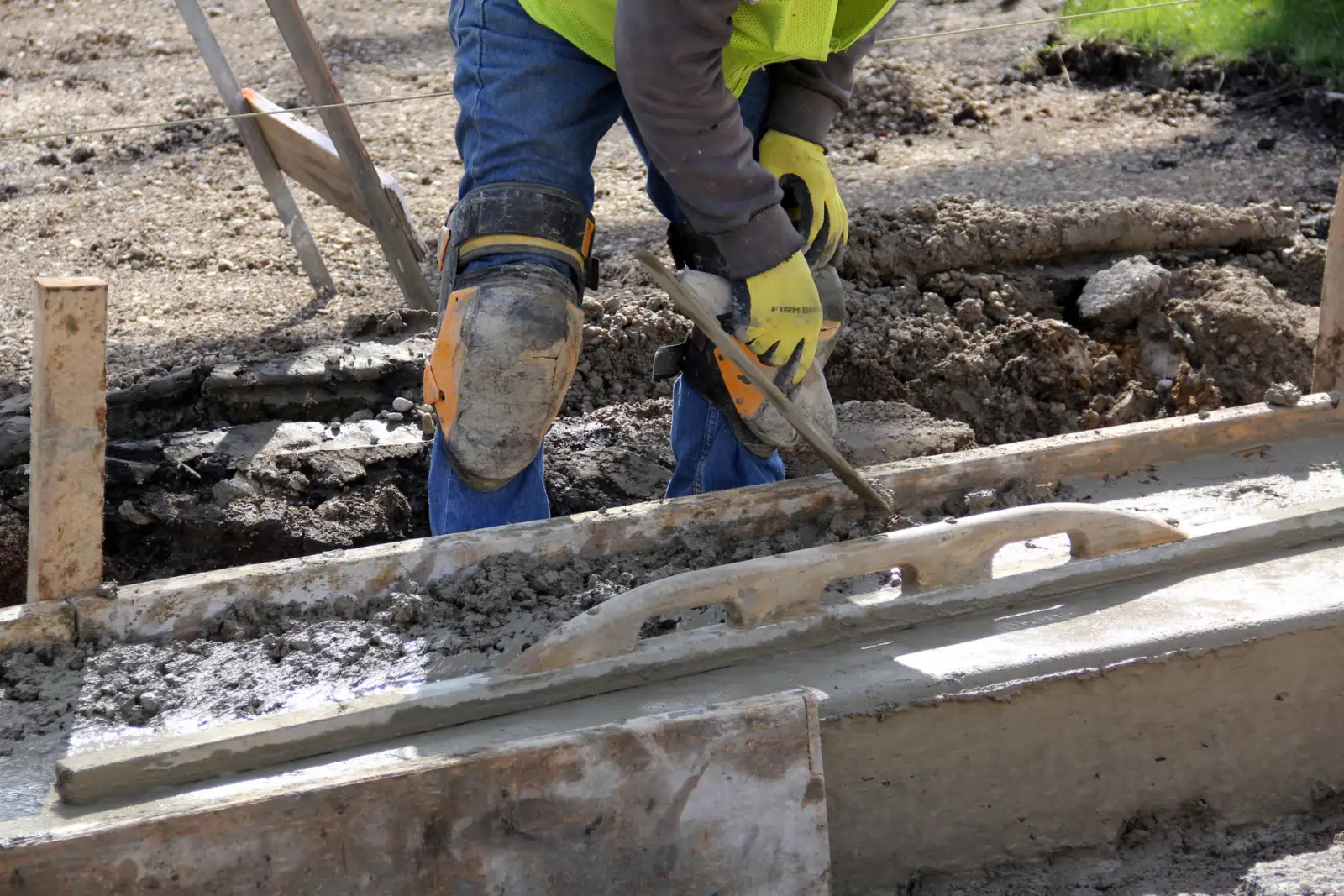
The concrete goes down, gets screeded and bull-floated. From here the sequence depends entirely on the finish. Color hardener is broadcast in two applications and floated in while the surface is still workable. Exposed aggregate takes a surface retarder sprayed on after finishing, which holds the top paste soft while the concrete below sets, so it can be washed off later at exactly the right moment — too early and aggregate comes loose, too late and the paste won't move. Texture skins and hand tooling happen in the same short window as stamping. Broom, swirl and float textures go on as the final pass. Rock salt is broadcast and pressed in before the surface hardens. All of these share the same underlying constraint: a window measured in tens of minutes that moves with temperature, sun and wind, which is why decorative pours are scheduled as crew days.
- 4
Joints, cure, seal and hand over a schedule
Control joints are saw-cut within the first day, placed along the lines the layout called for so they read as part of the pattern. Exposed aggregate gets its wash-off at the point the retarder has done its work, revealing the stone. The slab cures, and for colored work that curing is done carefully — plastic sheeting laid directly on colored concrete can leave permanent mottling, so curing method is part of the specification rather than an afterthought. Once the slab is properly dry, sealer goes on where the finish requires it, with an anti-slip additive on anything that's a winter walking route. The last deliverable is a written maintenance schedule: which product, how often, and what to use for traction instead of salt. That document is what determines whether the finish still looks right in year eight, and it's the thing most commonly not handed over.
What Does Decorative Concrete Cost in Duluth, MN?
- Square footage, and the ratio of field area to border and edge detail
- Finish type — a heavy broom costs little over plain; exposed aggregate, color hardener and hand-tooled textures cost progressively more
- Color method: integral only, color hardener, both, or applied stains
- How many colors, since each one is a separate operation and a separate material
- Saw-cut pattern complexity and the layout time it needs
- Borders and banding, which are effectively a second finish with a second setup
- Whether this is new flatwork or a decorative overlay on an existing sound slab
- Sealer type, anti-slip additive, and whether the first re-seal is included
- Crew size, since the finishing window is fixed and larger areas need more hands at once
Concrete work in this market runs about $5 to $13 per square foot for standard finishes and $8 to $18 for stamped and decorative work, so the decorative premium is real but varies enormously by technique. A heavy broom finish with a saw-cut border costs barely more than plain and delivers most of the visual improvement; a multi-color hand-tooled surface sits at the top of the range. The genuinely useful advice is to spend on layout and borders before spending on pattern, because joint layout costs almost nothing and changes how the whole slab reads. The risk worth naming is maintenance: any finish that depends on a sealer is a commitment, and in a climate that puts a slab under snow for a third of the year, a lapsed sealer schedule shows.
What to Look for in a Duluth Decorative Concrete Contractor
They talk about traction, not just appearance
A finish that looks superb and ices over is the wrong finish for a walking surface here. A contractor who raises grip before you do is thinking about February, which is the part of the year the catalog photographs skip.
Joint layout is drawn before the pour
Decorative concrete lives or dies on whether the joints were planned. Cuts that land on pattern lines and define borders read as design. Cuts dropped in afterward read as damage. It costs layout time, not materials.
Samples on-site, wet and dry
Color under a Duluth overcast is not color in a brochure, and every one of these surfaces spends a lot of its life wet. A sample board left out through a rain answers a question a catalog can't.
The maintenance schedule is part of the deliverable
Which sealer, how often, and what to use instead of salt. A written schedule handed over at the end is the difference between a finish that still looks right in year eight and one that quietly goes flat.
Residential & Commercial Decorative Concrete
Residential
Almost all decorative work here is residential: a Congdon Park patio with an exposed aggregate field and a colored border, a Lakeside front walk in a saw-cut diagonal, a Woodland driveway with banding that lines up with the garage doors. The pour season is short and decorative work needs a settled-weather day inside it, which narrows the calendar further.
Commercial
Commercial decorative work turns up at entries, courtyards, plazas and outdoor seating areas where a property wants something better than grey without a stone budget. Traffic volume changes the specification — color hardener rather than integral color alone, and harder-wearing sealers — and slip resistance moves from a preference to a documented requirement.
When Decorative Concrete Isn't the Right Call
- A surface nobody sees. A slab behind a shed or under a deck gets a broom finish and the money goes somewhere visible. Decorative work on hidden concrete is spending for its own sake.
- Anyone who won't maintain a sealer. This is the honest disqualifier for most colored and stained finishes. Exposed aggregate and integral-colored broom finishes are the low-maintenance options, and they're the right recommendation if upkeep isn't going to happen.
- A smooth finish on the main winter walk to your door. It will ice. Textured finish with an anti-slip additive, or a different surface — this one isn't a preference question.
- A slab that's already cracked and moving. Decorative treatment over a failing slab is a nicer-looking version of the same problem. Sort the structural issue first, and sometimes that answer is replacement.
- A budget that only just covers a plain slab. Decorative finishes are a genuine premium. Pour a good plain slab now and add a decorative overlay in a few years — that sequence works. Thinning the base to afford color does not.
Frequently Asked Questions
- What's the difference between decorative and stamped concrete?
- Stamping is one technique inside the decorative category — pressing a mat into fresh concrete to imprint a stone or brick pattern. Decorative concrete also covers integral and applied color, exposed aggregate, textured and tooled finishes, saw-cut patterns and borders. Plenty of decorative work involves no stamping at all, and in this climate the non-stamped options often age better.
- Which decorative finish holds up best in a Duluth winter?
- Exposed aggregate and integral-colored heavy-textured finishes. Both put the color and the texture in the concrete rather than in a film on top of it, both give real traction when wet or iced, and both look better as they weather rather than worse. Applied stains and smooth colored surfaces look excellent and depend far more on sealer maintenance.
- Does colored concrete fade?
- Integral color runs through the full slab depth and is very stable, though UV softens it slowly over years. Color hardener and applied stains live in the top layer and depend on sealer for protection — faded decorative concrete is nearly always a sealer maintenance story rather than a pigment quality one, and a recoat usually recovers most of it.
- How much more does decorative concrete cost than plain?
- It depends entirely on the technique. A heavy broom with a saw-cut border costs barely more than plain. Standard concrete work here runs about $5 to $13 per square foot while stamped and decorative work runs $8 to $18, so the top of the decorative range is roughly double. Layout and borders deliver most of the visual return for the least money.
- Is decorative concrete slippery?
- Some of it is. Smooth colored surfaces under a gloss sealer are genuinely slick when wet or iced, which matters a great deal on any winter walking route here. Exposed aggregate, rock salt, heavy broom and tooled textures all have good grip. Where a smooth look is wanted, an anti-slip additive broadcast into the sealer is the fix, and it has to be specified at install.
- Can decorative finishes be added to an existing slab?
- Yes, as a decorative overlay — colored and textured toppings, stencilled patterns and stamped overlays all go over existing concrete. The condition is the same as for any resurfacing: the slab has to be structurally sound and stable. Over a slab with working cracks or settlement, the overlay reproduces the problem within a year or two.
Learn More
- ASCC Decorative Concrete Council — The American Society of Concrete Contractors' decorative division — technical bulletins on coloring, texturing, sealing and the failure modes of each.
- ACI — Resistance to Cycles of Freezing and Thawing — Why entrained air matters in any exterior slab, decorative or not, and what happens to a surface finish when it's missing.
- NRMCA — Criteria for Freeze-Thaw Resistant Concrete Mixtures — Mix design for exterior concrete that will freeze — the specification underneath every decorative finish that survives here.
Need Decorative Concrete in Duluth, MN?
Tell us what’s going on and get an on-site estimate — no charge for the visit, and no obligation to book the work.
Get My Free Estimate